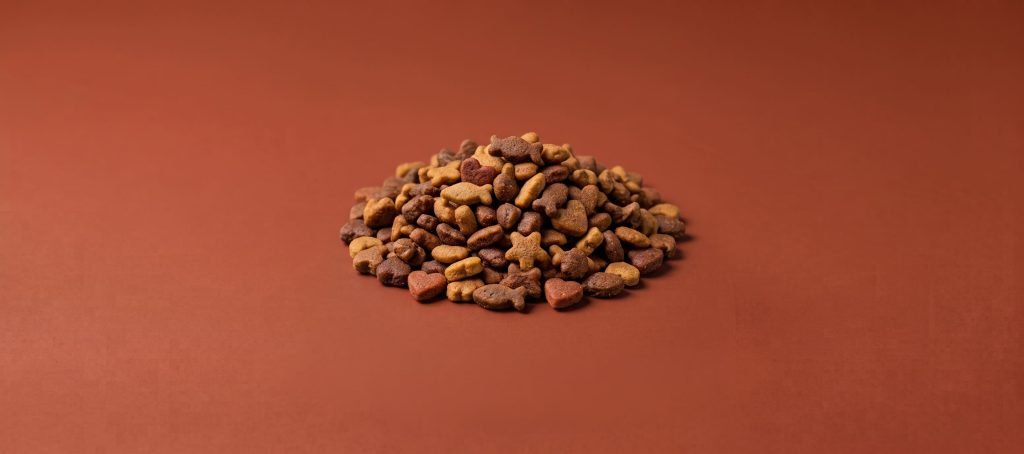
Short answer: For the vast majority of healthy cats, grain-free food is not healthier than a well-made food that contains grains. Grain-free is largely a marketing idea borrowed from human diet trends — not a nutritional upgrade. What actually matters is whether the food is complete, balanced, and made by a company that formulates responsibly, not whether “grain-free” appears on the bag.
That said, “grain-free” isn’t automatically bad either, and there are a few specific situations where it genuinely makes sense. There’s also one heart-health nuance most quick answers skip over. Below, we break down exactly what the science shows, when grain-free is worth it, when it’s a waste of money, and how to read a label so you don’t get fooled by the packaging.
Quick disclaimer: This article is educational and not a substitute for veterinary advice. Always talk to your vet before changing your cat’s diet — especially if your cat has a diagnosed health condition.
What “grain-free” actually means (and what it doesn’t)
Grain-free cat food is simply food made without grains such as corn, wheat, rice, barley, and oats. Instead of those grains, manufacturers use other carbohydrate sources — most commonly peas, lentils, chickpeas, potatoes, and sweet potatoes.
Here’s the part that trips up most shoppers: grain-free does not mean carb-free, and it doesn’t even reliably mean low-carb. Many grain-free formulas contain just as many carbohydrates as grain-inclusive foods — sometimes more — because the grains are swapped for starchy legumes and potatoes. If your goal is a lower-carbohydrate diet (for example, for a cat prone to weight gain), the words “grain-free” on the front of the bag tell you almost nothing. You have to look at the actual carbohydrate content.
So the label is describing which carbs are used, not whether carbs are used — and definitely not that the food is superior.
Where the grain-free trend actually came from
Grain-free pet food didn’t emerge from a breakthrough in feline nutrition. It rode in on a wave of human diet trends — low-carb, paleo, and gluten-free eating that became popular in the 2000s and 2010s. As “gluten-free” spread across grocery stores and restaurants, shoppers started looking for the same labels for their pets, and the pet food industry happily obliged.
The result is what nutritionists sometimes call a “health halo”: people assumed that because a diet felt healthy for humans, it must be healthy for cats too. But cats are not small humans — their biology is completely different, and a trend that helps a person lose weight has no automatic benefit for a carnivore.
Do cats even need grains?
No — cats do not need grains. But here’s the twist: they don’t need grain substitutes like peas and potatoes either.
Cats are obligate carnivores, which means they’re built to get their nutrition primarily from animal tissue. They require animal-based protein, specific amino acids like taurine, preformed vitamin A, and arachidonic acid — nutrients that are difficult or impossible to get in adequate amounts from plants. Their natural, biologically appropriate carbohydrate requirement is very low. (The Merck Veterinary Manual has a solid plain-English overview of proper feline nutrition if you want to go deeper.)
This is where the pro–grain-free argument sounds logical: “Cats are carnivores, they’d never eat corn in the wild, so remove the grains.” The problem is that grain-free foods usually just replace grains with other plant-based carbohydrates. Trading corn for potato or peas doesn’t make the food meaningfully more “carnivore-appropriate.” If anything, the more important question is the total carbohydrate load and the quality and quantity of animal protein — not the specific plant the carbs came from.
In other words: grains in cat food often function as inexpensive fillers and binders, but so do many grain-free ingredients. Removing grains doesn’t fix that problem by itself.
Are grains a common cat allergy? (This is the big myth)
One of the most common reasons owners reach for grain-free is a suspected food allergy. Here’s what the evidence actually shows:
- True food allergies in cats are uncommon to begin with. Itchy skin and stomach upset are far more often caused by environmental allergies, parasites, or unrelated GI issues.
- When a cat does have a genuine food allergy, the culprit is usually an animal protein — think beef, fish, chicken, or dairy — not a grain.
- Grain allergies in cats are rare, making up only a tiny fraction of the already-small group of cats with real food allergies.
So switching a healthy, itchy cat to grain-free “just in case” is, statistically, unlikely to solve the problem — and it may delay finding the real cause.
It’s also worth knowing that at-home allergy tests (blood or saliva kits) are notoriously unreliable for diagnosing food allergies. The veterinary gold standard is a carefully controlled elimination diet trial (typically 8–12 weeks on a novel or hydrolyzed protein), supervised by your vet. If your cat truly has a diagnosed grain allergy, then yes — a grain-free diet is appropriate. But that’s a diagnosis, not a guess. If you’re troubleshooting food reactions, our guide to the best wet cat food brands covers limited-ingredient and novel-protein options worth discussing with your vet.
The heart-health question: grain-free food and DCM
This is the nuance that most “is grain-free better?” answers gloss over, and it’s worth understanding properly — without panicking.
First, the taurine background
Taurine is an amino acid that’s essential for cats. Unlike dogs (and humans), cats can’t manufacture enough of it on their own, so they must get it from their diet. A taurine deficiency can cause dilated cardiomyopathy (DCM) — a serious disease where the heart muscle weakens and enlarges — as well as vision problems.
Decades ago, taurine-deficiency DCM was a real problem in cats. The pet food industry responded by adding taurine to commercial cat foods, and as a result, taurine-deficiency DCM in cats became uncommon. Any complete-and-balanced cat food sold today should meet established taurine minimums.
Then came the FDA investigation
In 2018, the U.S. Food and Drug Administration began investigating a possible link between certain diets and DCM. Crucially, the reported cases were overwhelmingly in dogs, not cats. Many implicated foods were grain-free and contained a high proportion of peas, lentils, other legumes (pulses), and/or potatoes — a category some veterinary nutritionists nickname “BEG” diets (boutique, exotic-protein, and grain-free). You can read the FDA’s own summary of the DCM investigation and its consumer Q&A directly.
Where do cats fit in? In an important 2019 update, the FDA noted 574 reported cases — of which the large majority were dogs and only about 14 were cats, with the cat count rising modestly into the low twenties in later tallies. So the feline signal is very small.
What’s confirmed vs. what isn’t
Here’s the honest state of the science, so you can make your own call:
- Causation has not been proven. The FDA has not concluded that grain-free food causes DCM, and it has not told owners to stop feeding grain-free diets.
- Taurine deficiency is not the main explanation for most of these newer cases — many affected animals had normal taurine levels, which points to something else.
- The leading hypothesis among veterinary nutritionists is that high levels of pulses (peas/lentils) may be involved, though the exact mechanism is still unknown. Tufts University’s Clinical Nutrition Service has a measured overview: the cause isn’t yet known but the concern hasn’t gone away.
- The topic is genuinely debated. Critics point out that the FDA reports were self-reported (not a controlled study) and that a slice of reported cases were eating grain-inclusive food. A 2024 peer-reviewed review likewise concludes it’s currently difficult to establish a clear cause-and-effect relationship.
The reasonable takeaway for cat owners
You don’t need to be alarmed, and you don’t need to swear off grain-free forever. But a sensible, non-fear-based approach is:
- Prioritize well-formulated diets from established companies that meet WSAVA nutrition guidelines (more on how to check this below).
- Be more cautious about boutique, legume-heavy grain-free foods where peas, lentils, or potatoes dominate the first several ingredients.
- Make sure any food you choose is complete and balanced with adequate taurine.
- If your cat has any heart concern or a diagnosed heart condition, talk to your vet before choosing a grain-free or legume-heavy diet.
When grain-free cat food can make sense
Grain-free isn’t a scam in every context. It’s a reasonable choice when:
- Your cat has a vet-diagnosed grain allergy or intolerance. Rare, but real — and in that case, avoiding the offending grain is exactly right.
- Your vet specifically recommends it as part of an elimination diet or a broader treatment plan.
- The best food for your individual cat happens to be grain-free. Plenty of excellent, well-formulated foods are grain-free simply because the recipe was built that way — and if your cat thrives on it, that’s fine.
The key theme: grain-free is a tool for specific situations, not a default health upgrade.
When grain-free is probably a waste of money
For most cats, spending extra on grain-free buys you marketing, not health. It’s likely unnecessary if:
- Your cat is a healthy adult with no diagnosed food allergy.
- You’re buying it because of a vague sense that grains are “bad” (they’re not, for most cats).
- The grain-free food you’re eyeing is more expensive than a comparably well-formulated grain-inclusive option — you may simply be paying more for the same or worse nutrition.
- The formula is packed with legumes and potatoes and pricey “superfood” sprinkles that do little for a carnivore (see the label section below).
If your goal is genuinely better nutrition on a budget, focus on protein quality and overall formulation rather than the grain-free label. Our best wet cat food brands roundup ranks options with that lens.
Grain-free vs. grain-inclusive: a quick comparison
| Factor | Grain-Free | Grain-Inclusive |
|---|---|---|
| Better for healthy cats? | No inherent advantage | No inherent disadvantage |
| Automatically low-carb? | No — often uses peas/potatoes | No — depends on the recipe |
| Common allergy fix? | Rarely (grain allergy is uncommon) | Usually fine; most allergies are to proteins |
| Heart-health note | Legume-heavy formulas are under study for DCM | No specific DCM signal |
| Cost | Often more expensive | Often more affordable |
| What actually matters | Complete & balanced, quality protein, responsible formulation | Complete & balanced, quality protein, responsible formulation |
The bottom row is the point: the grain question is far less important than the formulation question.
Does grain-free help with weight, diabetes, or digestion?
- Weight loss: What helps here is a higher-protein, lower-carbohydrate, portion-controlled diet — not “grain-free” specifically. A grain-free food loaded with potato and peas can still be high in carbs. Use our cat food calculator to dial in the right daily calories, and increase protein rather than volume.
- Diabetic cats: Low-carbohydrate diets can benefit some diabetic cats, but again, that’s about carbohydrate content, not the grain-free label. Any diet change for a diabetic cat should be coordinated with your vet, since insulin needs can shift quickly.
- Sensitive stomachs / digestion: If your cat has GI issues, the fix is more often about highly digestible ingredients, fat level, fiber, and ruling out medical causes than removing grains. Some owners find gentle, vet-approved additions like plain pumpkin helpful for stool quality — here’s what to know about cats and pumpkin. Persistent digestive problems deserve a vet visit, not a guessing game with labels.
How to actually choose a good cat food (grain or no grain)
Instead of chasing buzzwords, use the criteria veterinary nutritionists actually recommend. The WSAVA guidelines on selecting a pet food boil down to a few key questions:
- Is there an AAFCO nutritional adequacy statement? Look for wording that the food is “complete and balanced” for your cat’s life stage (kitten/growth, adult maintenance, or all life stages). This is non-negotiable.
- Does the company employ a qualified nutritionist? Ideally a board-certified veterinary nutritionist (DACVN) or a PhD in animal nutrition on staff formulating the diets.
- Does the brand do feeding trials or rigorous testing, and can it tell you the calorie content and answer specific questions about quality control?
- Are named animal proteins near the top of the ingredient list? “Chicken,” “turkey,” or “salmon” is more meaningful than vague “meat meal” or plant-protein concentrates. (Curious how individual proteins stack up? Try our cat food checker or browse guides like can cats eat shrimp.)
- Is it appropriate for your cat’s life stage and health? A senior cat, a kitten, and a cat with kidney disease all have different needs. For medical conditions, therapeutic diets matter — see our guide to cat food for kidney disease.
Notice that “grain-free” isn’t on that list. That’s the whole point.
How to read a grain-free label without getting fooled
If you do choose a grain-free food, read it critically:
- Don’t be swayed by “superfood” sprinkles. Ingredients like cranberries, blueberries, or various greens are often added in amounts too small to do anything meaningful — they’re there to appeal to you, the shopper, not to benefit your cat. (For the real story on one of these, see can cats eat blueberries.)
- Watch for ingredient splitting. A recipe can list “peas,” “pea protein,” and “pea fiber” separately so that no single pea ingredient sits at the top of the list — even though, combined, legumes make up a large share of the food.
- Check the carbohydrate reality. If peas, lentils, chickpeas, or potatoes dominate the first several ingredients, the food may be starchier than the “grain-free, high-protein” front label implies.
- Confirm the adequacy statement and taurine. Make sure it’s complete and balanced for the right life stage.
How to switch foods safely
Whatever you decide, don’t change foods overnight — abrupt switches are a common cause of stomach upset and food refusal. Transition gradually over 7–10 days, mixing increasing amounts of the new food with decreasing amounts of the old:
- Days 1–3: ~25% new / 75% old
- Days 4–6: ~50% / 50%
- Days 7–9: ~75% new / 25% old
- Day 10: 100% new
Watch for changes in appetite, energy, coat, and litter box output. Our cat food calculator can help you get portions right for the new food’s calorie density, and you can find more feeding guides on the CatFoodCheck blog.
Is grain-free cat food worth the extra cost?
Usually, no — not for a healthy cat with no diagnosed allergy. Grain-free foods often carry a premium price, and you’re frequently paying for positioning rather than nutrition. A thoughtfully formulated grain-inclusive food from a reputable company can be just as good (or better) for less money. Spend your budget on protein quality and responsible formulation, and let the grain question fall wherever the best individual food happens to land.
Frequently Asked Questions
Is grain-free cat food better for cats with sensitive stomachs?
Not usually. Digestive issues are more often about ingredient digestibility, fat and fiber levels, or an underlying medical problem than about grains. If your cat has ongoing GI trouble, see your vet rather than assuming grains are the cause.
Is grain-free cat food bad for a cat’s heart?
The evidence in cats is limited and unproven. The FDA’s DCM investigation focused overwhelmingly on dogs, with only a small number of cat cases, and no causal link has been established. As a precaution, favor well-formulated diets and be cautious with legume-heavy boutique foods — and talk to your vet if your cat has any heart concern.
Do indoor cats need grain-free food?
No. Indoor cats have the same basic needs as other cats: complete, balanced, protein-forward nutrition with appropriate calories. “Grain-free” offers them no special benefit.
Is grain-free the same as low-carb or carb-free?
No. Many grain-free foods replace grains with peas, lentils, or potatoes and can be just as high in carbohydrates. If you want low-carb, check the actual carbohydrate content rather than trusting the grain-free label.
Is grain-free cat food good for weight loss?
Not by itself. Weight management comes from higher protein, controlled carbohydrates, and correct portions — not from removing grains. A grain-free food can still be calorie-dense and starchy.
Can kittens eat grain-free food?
Only if it’s specifically labeled complete and balanced for growth (or all life stages). Life-stage appropriateness matters far more than whether the food is grain-free.
Is grain-free good for diabetic cats?
Some diabetic cats do better on lower-carbohydrate diets, but that’s about carb content, not grains. Any dietary change for a diabetic cat must be coordinated with your veterinarian.
What are the most common cat food allergies — is it grains?
No. When cats do have food allergies (which is uncommon), the usual triggers are animal proteins like beef, fish, chicken, or dairy. Grain allergies are rare.
Is grain-free cat food worth the money?
For most healthy cats, no. You’re often paying a premium for marketing. Put your budget toward protein quality and responsible formulation instead.
The bottom line
Grain-free cat food is neither the health upgrade its marketing suggests nor the danger some headlines imply. For most healthy cats, it offers no real advantage over a well-made food that contains grains — and it often costs more. It genuinely helps in a narrow set of cases (a vet-diagnosed grain allergy, or when your vet recommends it), and there’s a reasonable, non-alarmist case for being cautious with legume-heavy boutique formulas while the DCM research continues.
The healthiest move isn’t to ask “grain or no grain?” It’s to ask: Is this food complete and balanced, protein-forward, and made by a company that formulates responsibly for my cat’s life stage and health? Answer that, and the grain question mostly takes care of itself.
Not sure where to start? Look up any ingredient with our cat food checker, compare top picks in our best wet cat food brands guide, and — as always — loop in your veterinarian before making a change.
Trusted resources & further reading
- U.S. FDA — Investigation into diet and canine DCM and consumer Q&A
- Tufts University Clinical Nutrition Service (Petfoodology) — Diet-associated DCM update
- WSAVA — Global Nutrition Guidelines and Selecting a Pet Food (PDF)
- Merck Veterinary Manual — Proper Nutrition for Cats
- Peer-reviewed review (2024) — Grain-free diets for dogs and cats: nutritional effects and health considerations
This article is for general information only and does not replace individualized advice from your veterinarian.