Last updated August 2026 · Reviewed for accuracy against the WSAVA Global Nutrition Guidelines and AAFCO nutritional standards
If you have ever stood in the cat-food aisle reading the backs of ten different cans, you already know the problem: every brand claims to be the healthiest, and almost none of them explain why. This guide cuts through the marketing. Below you will find the best wet cat food brands ranked by the criteria veterinarians and board-certified veterinary nutritionists actually use in 2026 — not by which can has the prettiest label.
We ranked ten brands using the same framework a good vet would: Does the company employ qualified nutritionists? Does it run feeding trials and publish research? Is every recipe complete and balanced to AAFCO standards? And does the food deliver what an obligate carnivore genuinely needs — high animal protein, high moisture, and the right micronutrients like taurine? You will also find category winners (kittens, seniors, kidney support, weight management, budget, picky eaters), the red flags that should make you put a can back on the shelf, and answers to the questions cat owners ask most.
Quick note before the list: There is no single “best” wet cat food for every cat. The healthiest choice depends on your cat’s age, weight, and health status. Use this ranking to build a shortlist, then confirm the final pick with your own veterinarian — especially if your cat has a medical condition. This article is educational and is not a substitute for personalized veterinary advice.
Top Wet Cat Food Brands at a Glance (2026)
| Brand | Why vets trust it | Best for | Price tier |
|---|---|---|---|
| Hill’s Science Diet | Meets all five WSAVA manufacturer criteria; huge research base; therapeutic line for medical needs | The most research-backed everyday brand | $$$ |
| Royal Canin | Meets all five WSAVA criteria; precise life-stage, breed & condition formulas | Targeted needs & picky eaters | $$$ |
| Purina Pro Plan | Meets all five WSAVA criteria; strong R&D at a more accessible price | Research quality + high-protein options | $$–$$$ |
| Purina ONE | WSAVA-aligned, AAFCO complete, balanced nutrition without the premium price | Budget-conscious owners who still want science | $$ |
| Fancy Feast (Purina) | Backed by Purina’s research; complete-and-balanced pâtés; huge variety | Budget + picky eaters + variety | $ |
| Iams | Mainstream, research-backed, AAFCO complete, widely available | Accessible everyday nutrition | $$ |
| Wellness (CORE / Complete Health) | Premium, high-protein, named meats, no artificial additives | High-protein, whole-ingredient recipes | $$$ |
| Tiki Cat | Very high animal protein, high moisture, low carb, shredded textures | Hydration & low-carb goals | $$$ |
| Weruva | High moisture, gravy-rich, human-grade-style ingredients | Extra hydration & finicky eaters | $$$ |
| Instinct (Nature’s Variety) | Raw-inspired, high animal protein, minimally processed | High-protein, less-processed leanings | $$$ |
Formats vary by brand and include pâté, minced, shredded, and chunks in gravy or broth. Always confirm the specific recipe you buy carries an AAFCO “complete and balanced” statement for your cat’s life stage.
Want to know exactly how many cans your cat should eat per day? Run the numbers with the free Cat Food Calculator on CatFoodCheck before you stock up.
How We Ranked These Brands (the Vet Criteria That Actually Matter)
Most “best cat food” lists rank by taste tests or Amazon stars. Veterinarians do not. They evaluate the company behind the can and the nutritional science inside it. Our ranking weighs four things.
1. The WSAVA manufacturer test (the single biggest signal)
The World Small Animal Veterinary Association’s Global Nutrition Guidelines are the most widely cited veterinary standard for judging pet-food quality. They are not a certification or a seal — instead, they are a set of questions that let you look behind the label at whether a company invests in real nutritional science. The core questions ask whether a brand:
- Employs a full-time qualified nutritionist — ideally a board-certified veterinary nutritionist (a Diplomate of ACVN or ECVCN) or a PhD in animal nutrition.
- Formulates diets on published, peer-reviewed science, not just by mixing to a minimum nutrient chart.
- Runs AAFCO feeding trials rather than only formulating “on paper.”
- Owns and controls its manufacturing plants, so quality and safety are managed in-house.
- Publishes complete nutrient analyses and answers these questions transparently.
The key insight from WSAVA is that a label alone doesn’t tell you enough: a food can hit AAFCO minimums while being made by a company with no nutrition scientists and no quality-control infrastructure. Brands that publicly document all five of these points typically include Hill’s, Royal Canin, and Purina Pro Plan — which is exactly why those three sit at the top of nearly every vet-built list, including this one. You can read the WSAVA’s own owner-facing checklist in its “Selecting a Pet Food for Your Pet” toolkit.
2. “Complete and balanced” to AAFCO standards
The single most important sentence on any can is the AAFCO nutritional adequacy statement. It confirms the food contains the required nutrients, in the right ratios, for a specific life stage — usually written as “formulated to meet the nutritional levels established by the AAFCO Cat Food Nutrient Profiles for [growth / adult maintenance / all life stages]” or “animal feeding tests… substantiate that this food provides complete and balanced nutrition.” If a product says “for supplemental or intermittent feeding only,” it is a topper or treat — not a diet — and should never be your cat’s sole food. Learn more directly from AAFCO.
3. What an obligate carnivore actually needs
Cats are obligate carnivores. As the Cornell Feline Health Center explains, cats evolved eating prey that is high in protein, moderate in fat, and very low in carbohydrate — and they rely on nutrients found only in animal tissue. That biology drives what a great wet food looks like:
- Named animal protein first. Ingredients are listed by weight, so you want water/broth and a named protein (chicken, turkey, salmon, tuna) at the top — not an unspecified “meat” or a plant protein leading the list.
- High moisture. Wet food is roughly 70–85% water versus about 7–12% for kibble. Because cats evolved from desert animals and have a weak thirst drive, that built-in moisture is one of the biggest reasons vets favor canned food — it supports urinary and kidney health and overall hydration.
- Taurine. This amino acid is found in meat but not in plants, and cats cannot make enough of their own. Taurine deficiency causes blindness and a serious heart disease (dilated cardiomyopathy). Quality, meat-based, complete diets include guaranteed taurine.
- Beneficial extras. Omega-3 and omega-6 fatty acids for skin and coat, plus antioxidants, prebiotics, and (in some formulas) probiotics.
4. Safety and recall history
A brand’s track record matters. We favored companies with strong quality control and transparent recall handling, and we recommend every owner sanity-check current alerts against the FDA’s pet food recalls and withdrawals page before switching diets.
One honest caveat about the ranking: brands 1–6 publicly meet the full WSAVA manufacturer test. Several premium favorites lower down (Wellness, Tiki Cat, Weruva, Instinct) make genuinely high-quality, high-protein food that many owners — and plenty of vets — like, but they don’t always publicly document every WSAVA criterion (for example, keeping a full-time board-certified nutritionist on staff or owning their plants). That doesn’t make them “bad.” It means you should verify those specifics with the company if manufacturer transparency is your top priority. We’ve flagged this for each brand below.
The 10 Best Wet Cat Food Brands, Ranked (2026)
1. Hill’s Science Diet — Best Overall (and the vet’s default)
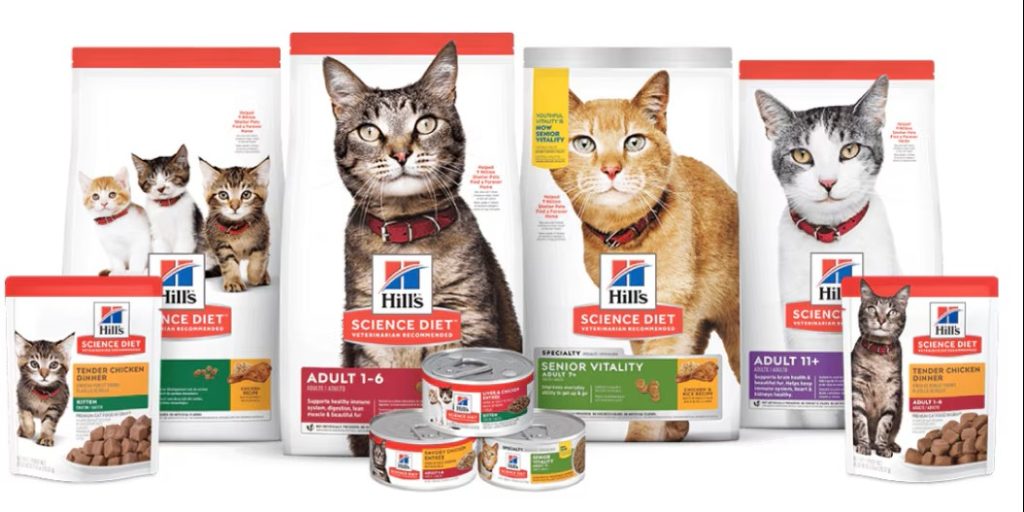
Hill’s is the brand most likely to be sitting on the shelf inside your vet clinic, and for good reason: it publicly checks every box on the WSAVA manufacturer test. Hill’s employs board-certified veterinary nutritionists and PhD nutritionists, runs feeding trials, owns its manufacturing, and has one of the largest published research bases in pet nutrition.
- Everyday line (Science Diet): complete-and-balanced pâtés and stews for kitten, adult, indoor, Perfect Weight, Sensitive Stomach & Skin, and senior (7+ / 11+).
- Therapeutic line (Prescription Diet): clinically formulated diets such as k/d for kidney support and c/d for urinary care — these require veterinary authorization.
- Best for: owners who want the most research-backed everyday food, and any cat with a diagnosed condition that needs a therapeutic diet.
- Watch-outs: some recipes use by-products and grains (nutritionally fine, but some owners prefer named whole ingredients), and it sits at a premium price.
2. Royal Canin — Best for Targeted & Condition-Specific Needs
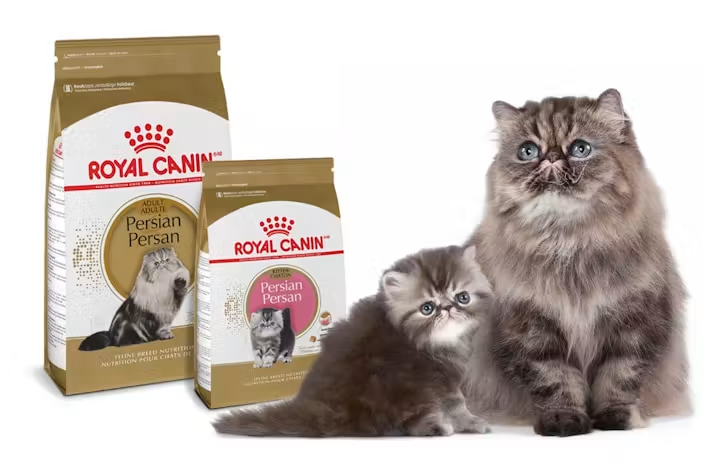
Royal Canin’s whole philosophy is precision. Where other brands offer “adult” and “kitten,” Royal Canin slices nutrition by life stage, body type, breed, and medical condition. It, too, meets all five WSAVA criteria, with board-certified nutritionists, global R&D, company-owned plants, and feeding trials.
- Strengths: exceptionally palatable loaf and thin-slices-in-gravy textures (a lifesaver for picky eaters), plus a deep Veterinary Diet range (Renal, Urinary SO, Gastrointestinal, and more) for prescription use.
- Best for: cats with specific, well-defined needs and households fighting a fussy eater.
- Watch-outs: ingredient lists lean on by-products/derivatives and grains, and some maintenance formulas are more moderate in protein than boutique brands. Premium price.
3. Purina Pro Plan — Best Science-to-Price Ratio
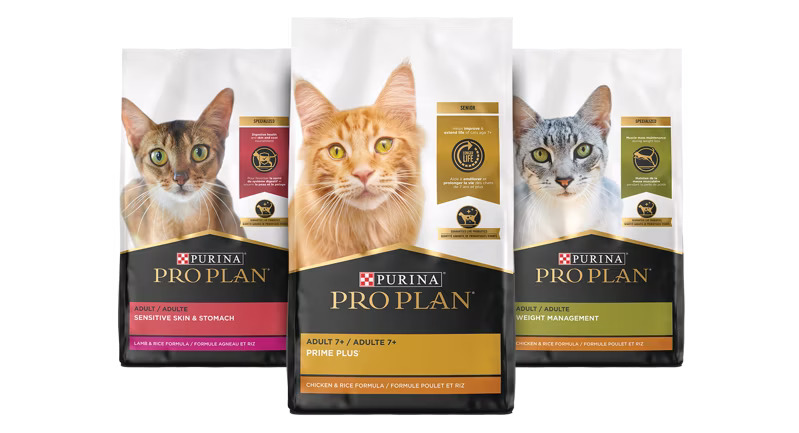
Purina Pro Plan gives you big-brand research muscle at a slightly more accessible price than Hill’s or Royal Canin. Nestlé Purina runs a large veterinary and nutrition research operation, owns its plants, conducts feeding trials, and employs board-certified nutritionists — the full WSAVA slate.
- Strengths: a wide wet range including Complete Essentials, high-protein True Nature, sensitive skin & stomach, urinary options, and senior 7+/11+ formulas — plus Pro Plan Veterinary Diets (NF for kidney, UR for urinary, EN for GI) for prescription use.
- Best for: owners who want documented research quality without the top-tier price, and cats who benefit from higher-protein recipes.
- Watch-outs: some formulas include artificial flavors or guar gum (used for texture); not harmful, but sensitive cats may do better on simpler recipes.
4. Purina ONE — Best Budget Brand That Still Does the Science
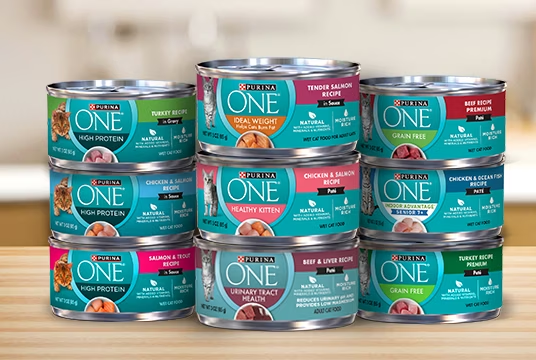
Purina ONE is the sweet spot for owners who want a research-backed, WSAVA-aligned brand without a premium receipt. Its wet formulas are AAFCO complete and balanced and deliver dependable everyday nutrition — the kind of “does the basics genuinely well” option vets are comfortable recommending when budget is a real constraint.
- Best for: cost-conscious households that still want a company investing in nutritional science.
- Watch-outs: less specialized than Pro Plan; fewer condition-specific choices.
5. Fancy Feast (Purina) — Best Cheap Wet Food Vets Won’t Frown At
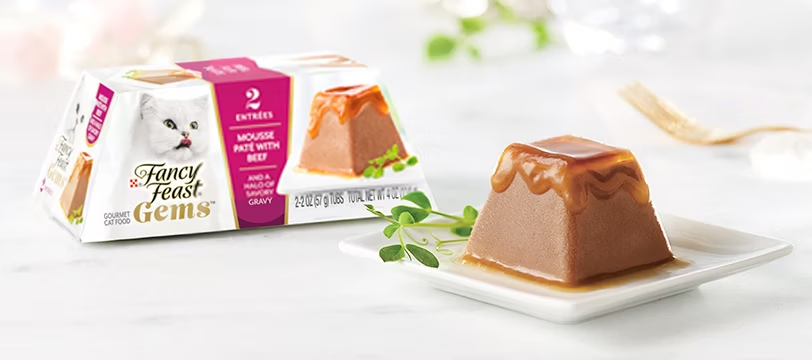
Fancy Feast surprises people. Because it’s backed by Purina’s research and offers genuinely complete-and-balanced recipes, it’s the budget canned food most vets consider perfectly acceptable — and it’s a go-to for picky eaters thanks to its enormous flavor and texture variety.
- Best for: tight budgets, fussy cats, and owners who want to rotate flavors and textures.
- Watch-outs: this is the brand where reading the label matters most. Some “gourmet” Fancy Feast products are labeled complementary (i.e., treats), while the Classic Pâté line is complete and balanced and is the cleanest, most reliable pick for daily feeding. Prefer recipes without artificial colors.
6. Iams — Best Widely Available Mainstream Option
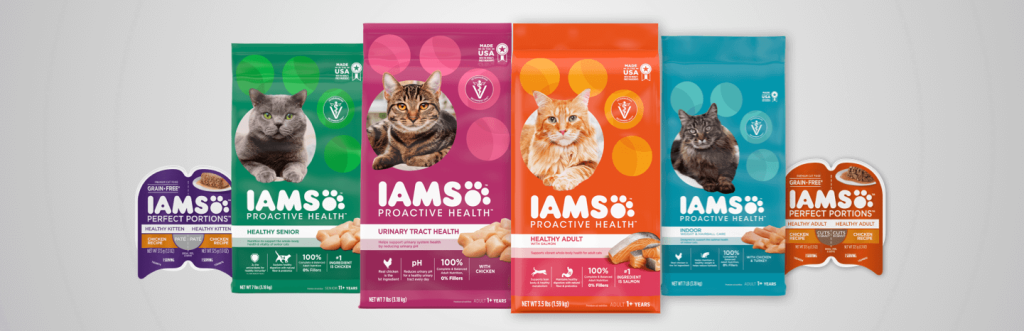
Iams is a solid, research-backed, AAFCO-complete mainstream brand that you can find almost anywhere. It won’t wow the whole-ingredient crowd, but it delivers consistent, balanced everyday nutrition at a fair price — a reasonable default when premium brands aren’t available or affordable.
- Best for: accessible, reliable everyday feeding.
- Watch-outs: mid-tier ingredient quality; fewer specialized formulas than the brands above.
7. Wellness (CORE / Complete Health) — Best Premium, High-Protein Whole-Ingredient Pick
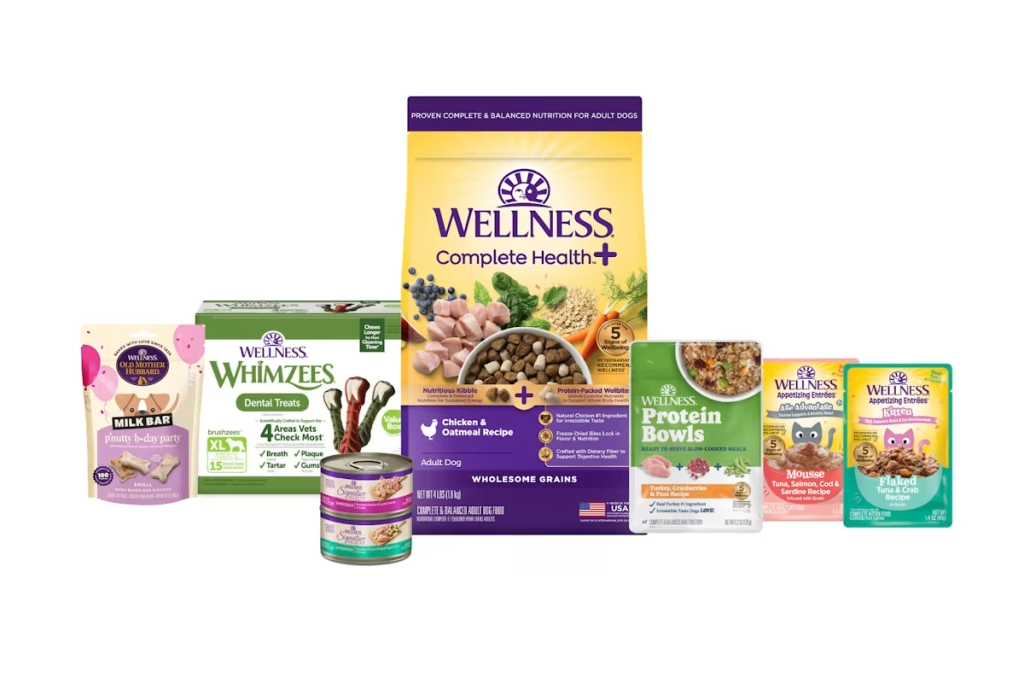
Wellness is where our list shifts from “big-brand research leaders” to “premium whole-ingredient favorites.” The CORE line in particular is high in animal protein and moisture, built on named meats, and free of artificial colors, flavors, and preservatives — appealing to owners who want a species-appropriate, grain-inclusive or grain-free recipe.
- Best for: owners prioritizing high protein and named, recognizable ingredients.
- Watch-outs: verify how Wellness stacks up on the specific WSAVA manufacturer questions if in-house nutritionists and owned facilities are your priority. Premium price.
8. Tiki Cat — Best for Hydration & Low-Carb Diets
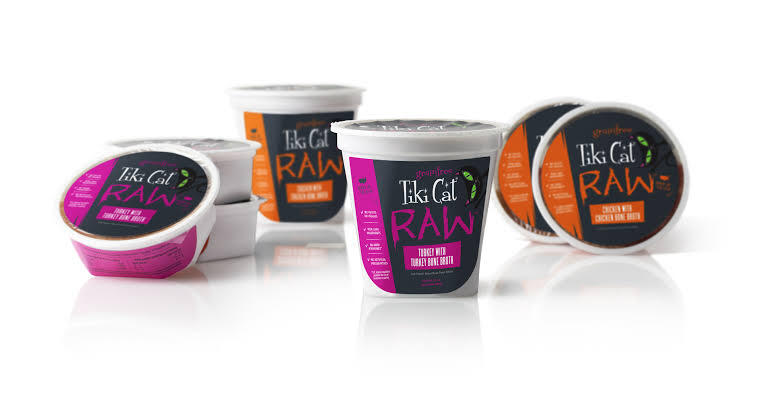
Tiki Cat leans hard into what carnivores want: very high animal protein, very high moisture, minimal carbohydrate, and appealing shredded fish or chicken in broth. For cats that need more water in their diet or owners aiming for a low-carb profile, it’s a standout.
- Best for: boosting hydration, low-carb feeding, and tempting picky eaters with texture.
- Watch-outs: check each recipe’s AAFCO statement — some Tiki Cat products are complete and balanced while others are supplemental. Rotate proteins rather than feeding fish-only every day (more on fish below).
9. Weruva — Best Gravy-Rich Food for Extra Moisture
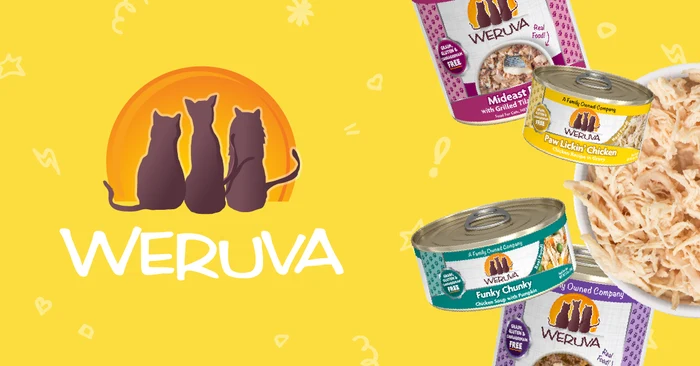
Weruva builds its reputation on human-grade-style ingredients and generous gravy, which makes it excellent for driving up water intake — a real benefit for urinary and kidney health. Named proteins and appealing textures make it a finicky-cat favorite.
- Best for: cats who need more moisture and owners who want a “looks like real food” bowl.
- Watch-outs: many recipes are lower in fat and calories (fine as part of a plan, but confirm your cat is getting enough energy), and some lines are supplemental rather than complete — read the label. Several options are fish-forward.
10. Instinct (Nature’s Variety) — Best Raw-Inspired Option
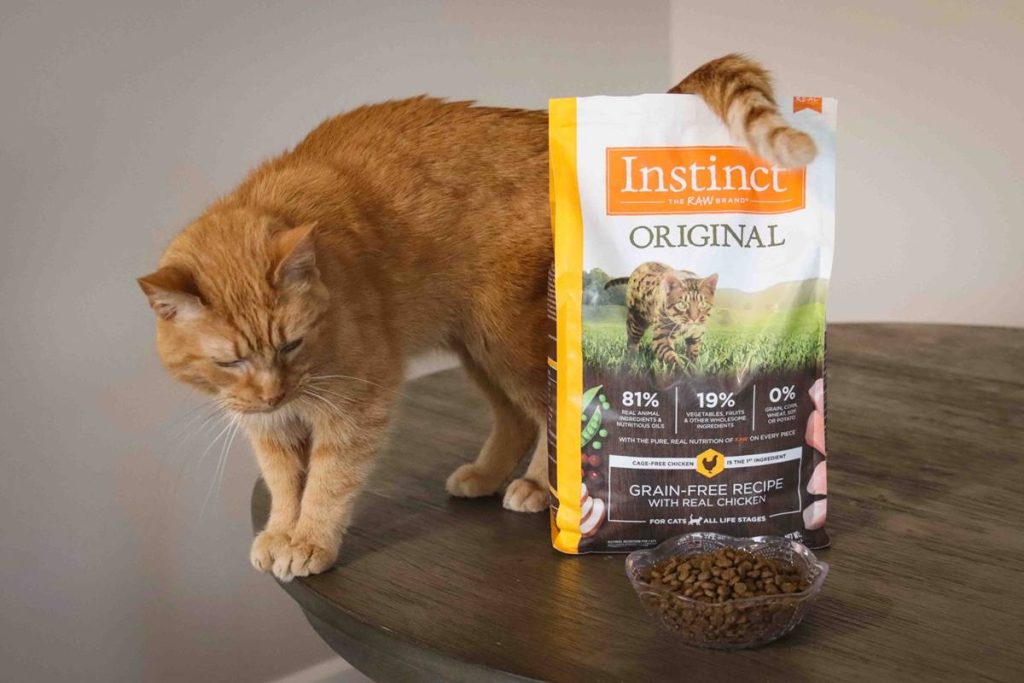
Instinct rounds out the top ten with raw-inspired, high-protein recipes built on named animal ingredients, some coated in freeze-dried raw. For owners drawn to minimally processed, protein-dense food that still comes in a convenient can, it’s a strong choice.
- Best for: high-protein, less-processed feeding without handling actual raw meat.
- Watch-outs: premium price; verify the brand’s nutritionist and manufacturing details against the WSAVA questions if that transparency matters to you.
Honorable mentions
- Smalls — gently cooked, fresh, subscription-delivered food that’s high in moisture and protein and formulated to meet AAFCO standards. A great fit for owners wanting fresh food without a raw diet.
- Open Farm — strong ingredient transparency and traceability with high-quality, named proteins.
- Sheba — inexpensive, widely available pâtés that are often complete and balanced; a reasonable budget alternative to Fancy Feast (as always, check the label).
Best Wet Cat Food by Category & Life Stage
The overall ranking is a starting point. Here’s how to narrow it to your cat. Not sure what “life stage” your cat is in? The Cat Age Calculator converts your cat’s age to human years so you can pick the right formula.
Best wet cat food for kittens
Kittens need extra protein, fat, and omega-3s (especially DHA) for growth and brain and eye development. Choose a recipe labeled for “growth” or “all life stages.” Reliable picks: Hill’s Science Diet Kitten, Royal Canin Kitten, Purina Pro Plan Kitten, and Wellness CORE Kitten. Feeding a pregnant or nursing cat? Growth/all-life-stages food suits her too — and you can track her timeline with the Cat Pregnancy Calculator.
Best wet cat food for senior cats (7+ / 11+)
Older cats benefit from adjustments for slowing metabolism, muscle maintenance, joint support, and — critically — kidney-friendly phosphorus balance and omega-3s. Look at Hill’s Science Diet Senior/Youthful Vitality, Purina Pro Plan 7+ and 11+, and Royal Canin’s aging formulas. Because kidney changes often begin around this age, senior cats deserve regular vet bloodwork.
Best wet cat food for kidney disease (CKD)
Chronic kidney disease is one of the most common conditions in older cats, and diet is a cornerstone of managing it. The evidence supports therapeutic renal diets (such as Hill’s Prescription Diet k/d, Royal Canin Renal, and Purina Pro Plan NF) — but these are prescription foods that require veterinary supervision and monitoring. For a full breakdown of what makes a kidney-friendly diet different and which options are worth asking your vet about, read our dedicated guide: Cat Food for Kidney Disease: Vet-Recommended Options.
Best wet cat food for urinary health
For cats prone to lower urinary tract issues or crystals, high-moisture wet food is protective in itself, and therapeutic urinary diets (Hill’s c/d, Royal Canin Urinary SO, Purina Pro Plan UR) can dissolve or prevent certain stones. These are prescription diets — use them under veterinary guidance.
Best wet cat food for weight management
Wet food is naturally lower in calories per gram than kibble and its water content helps cats feel full, which makes it a smart tool for weight control. Consider Hill’s Perfect Weight and Purina Pro Plan Weight Management, or a high-protein, lower-calorie wet recipe. Portion precisely using the Cat Food Calculator, and remember treats should stay under about 10% of daily calories.
Best wet cat food for sensitive stomachs
If your cat vomits frequently or has loose stools, a highly digestible, limited- or simple-ingredient formula can help. Hill’s Sensitive Stomach & Skin and Purina Pro Plan Sensitive Skin & Stomach are dependable starting points — but persistent GI signs warrant a vet visit to rule out underlying disease.
Best budget wet cat food
You do not have to spend a fortune to feed well. Fancy Feast Classic Pâté and Purina ONE deliver complete-and-balanced nutrition from a company that invests in research, at a fraction of premium prices.
Best wet cat food for picky eaters
Fussy cats often respond to strong aroma, gravy, and texture variety. Rotate flavors within Fancy Feast, try Tiki Cat’s shredded textures, or use Royal Canin’s famously palatable loaf-in-gravy recipes. Warming wet food slightly (never hot) intensifies the smell and can win over a reluctant eater.
Wet Food Red Flags: What to Avoid
Put a can back on the shelf if you see any of these:
- No AAFCO complete-and-balanced statement for your cat’s life stage — unless you’re intentionally buying a topper. Anything marked “for supplemental or intermittent feeding only” is not a diet.
- Vague protein sourcing like unspecified “meat,” “poultry,” or “animal” instead of a named species.
- Plant protein leading the ingredient list, or a high carbohydrate load, in a food meant to be the whole diet.
- A company that can’t answer the WSAVA questions — no nutritionist, no research, no transparency about manufacturing or testing.
- Allium flavorings. Onion and garlic are toxic to cats and have no place in cat food, but they can sneak into human “people food” toppers and table scraps. See exactly why in our guides on whether cats can eat onion and whether garlic is toxic to cats, and keep our full list of toxic foods for cats handy.
A word on fish-based wet foods. Cats love fish, but fish shouldn’t dominate every meal. Tuna in particular can contribute to mercury exposure and, if fed as a staple, a thiamine deficiency — read the safe-serving details in our Can Cats Eat Tuna? guide. Salmon is one of the few proteins vets actively like for cats, as we cover in Can Cats Eat Salmon?. The simple rule: rotate proteins (chicken, turkey, salmon) rather than feeding fish-only day after day.
Before you switch brands, it’s also worth a 30-second check of the FDA’s current pet food recalls.
How Much Wet Food Should You Feed?
A typical 3 oz (85 g) can of wet cat food contains roughly 70–100 kcal, and most adult indoor cats need about 200–300 kcal per day (active cats and kittens need more). Because every recipe’s calorie density differs, the manufacturer’s feeding guide is only a starting point. For a precise daily serving based on your cat’s ideal weight, age, and activity — in cans and grams — use the free Cat Food Calculator on CatFoodCheck.
How to switch cat foods safely
Cats have sensitive stomachs and stubborn palates, so transition over 7–10 days: start at about 75% old food and 25% new, move to 50/50, then 25% old and 75% new, and finally 100% new. Rushing the switch is the fastest way to trigger vomiting, diarrhea, or a food strike.
Wet vs. Dry Cat Food: What Vets Actually Say
Both have a place, and the best answer is often a wet-forward diet. Wet food wins on hydration, tends to be higher in protein and lower in carbohydrate, and its water content helps with satiety — which is why it’s especially valuable for cats with urinary disease, kidney disease, diabetes, or weight concerns. Dry food wins on convenience, cost, and shelf life, and can be handy for food-puzzle enrichment. Many vets recommend making high-quality wet food the core of the diet (or at least a daily component) and using kibble thoughtfully rather than as the sole food. Your own vet can tailor the mix to your cat. For more on the broader nutrition picture, browse the cat nutrition guides on CatFoodCheck.
Frequently Asked Questions
Do vets recommend wet or dry cat food? Most vets are comfortable with either when it’s complete and balanced, but many lean toward wet food — or a wet-forward mix — because its high moisture supports hydration, urinary and kidney health, and weight control. The right balance depends on your individual cat.
What is the healthiest wet cat food brand? There’s no universal winner. Among brands that meet the full WSAVA manufacturer test, Hill’s Science Diet, Royal Canin, and Purina Pro Plan lead. The healthiest choice for your cat is a complete-and-balanced recipe from a research-backed brand that matches your cat’s life stage and health status.
Is Fancy Feast vet-approved? Fancy Feast is backed by Purina’s research, and its complete-and-balanced recipes (like the Classic Pâté line) are widely considered a perfectly acceptable, budget-friendly option. Just confirm the specific product carries an AAFCO complete-and-balanced statement rather than being a “complementary” treat.
How much wet food should a cat eat per day? Most adult indoor cats need about 200–300 kcal daily, which is roughly 2–3 standard cans depending on the recipe’s calorie density. Calculate an exact amount for your cat with the Cat Food Calculator.
Is grain-free wet cat food necessary? Not for most cats. Grains are not inherently harmful to cats, and what matters far more is that the diet is high in quality animal protein and complete and balanced. Some cats with specific sensitivities do better grain-free — decide with your vet, not by marketing.
What’s the best wet food for a cat with kidney disease? Veterinary therapeutic renal diets (such as Hill’s k/d, Royal Canin Renal, and Purina Pro Plan NF) are the evidence-based choice, but they require a prescription and monitoring. See our full guide: Cat Food for Kidney Disease.
Can kittens eat adult wet food? Not as their main diet. Kittens need food labeled for “growth” or “all life stages” to get the extra protein, fat, and DHA they need. An occasional bite of adult food won’t hurt, but it shouldn’t replace a proper kitten formula.
The Vet Takeaway
The best wet cat food isn’t the one with the boldest health claims — it’s the one made by a company that invests in real nutritional science, carries an AAFCO complete-and-balanced statement for your cat’s life stage, and delivers what a carnivore actually needs: high animal protein, high moisture, and guaranteed taurine. If you want the safest default, start with a WSAVA-compliant brand (Hill’s Science Diet, Royal Canin, or Purina Pro Plan). If you want premium whole-ingredient recipes and don’t mind verifying manufacturer details, the high-protein options further down this list are excellent too.
Whatever you choose, match it to your cat’s age, weight, and health, portion it accurately, and check in with your veterinarian — especially for any cat with a medical condition. Not sure whether a specific food or ingredient is safe? Use the free CatFoodCheck food checker to look up any food in seconds, and explore more vet-reviewed nutrition guides on the blog.
Sources & Authoritative Further Reading
- WSAVA Global Nutrition Guidelines — the veterinary framework for evaluating pet-food manufacturers: https://wsava.org/global-guidelines/global-nutrition-guidelines/
- WSAVA “Selecting a Pet Food for Your Pet” toolkit (PDF) — the owner-facing manufacturer questions: https://wsava.org/wp-content/uploads/2021/04/Selecting-a-pet-food-for-your-pet-updated-2021_WSAVA-Global-Nutrition-Toolkit.pdf
- AAFCO (Association of American Feed Control Officials) — pet-food nutritional standards and the “complete and balanced” statement: https://www.aafco.org/
- Cornell Feline Health Center — Feeding Your Cat — feline nutrition fundamentals for obligate carnivores: https://www.vet.cornell.edu/departments-centers-and-institutes/cornell-feline-health-center/health-information/feline-health-topics/feeding-your-cat
- ASPCA — People Foods to Avoid Feeding Your Pets — including allium and other toxins: https://www.aspca.org/pet-care/animal-poison-control/people-foods-avoid-feeding-your-pets
- U.S. FDA — Pet Food Recalls & Withdrawals — check current safety alerts: https://www.fda.gov/animal-veterinary/safety-health/recalls-withdrawals
Related reading on CatFoodCheck: Cat Food Calculator · Cat Food for Kidney Disease · Can Cats Eat Tuna? · Can Cats Eat Salmon? · Can Cats Eat Chicken? · Full Blog
Disclaimer: This article is for general educational purposes and does not replace individualized veterinary advice. Therapeutic and prescription diets require veterinary authorization. Always consult your veterinarian before changing your cat’s diet, especially if your cat has a health condition. Product formulations and availability change over time — confirm the current label and AAFCO statement on any product before purchase.