Quick answer: A raw cat food diet feeds uncooked muscle meat, organs, and (usually) ground bone to mimic what a cat would eat in the wild. Done right — with a properly balanced recipe and strict food-safety habits — some cats do well on it. Done casually, raw feeding carries two serious risks: dangerous bacteria (for your cat and your household) and nutritional imbalance. This guide walks you through the benefits, the risks the glossy brand pages skip, exact feeding amounts, a day-by-day transition schedule, and the safety rules that make raw feeding responsible rather than reckless.
This article is for education only and is not a substitute for advice from your own veterinarian. If your cat is a kitten, a senior, pregnant, or has any health condition, talk to your vet before changing diets. Reviewed for accuracy against the WSAVA Global Nutrition Guidelines and AAFCO nutrient standards.
What Is a Raw Cat Food Diet?
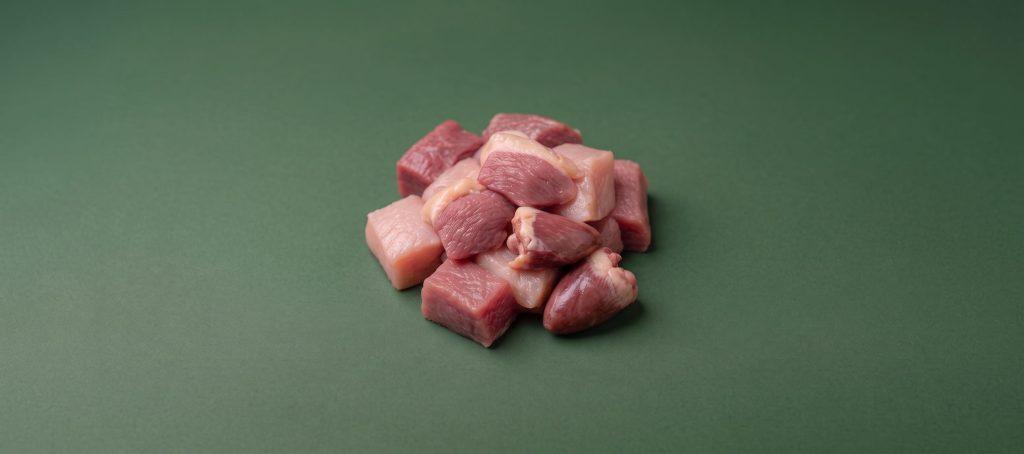
A raw cat food diet is built around uncooked animal ingredients — muscle meat, secreting organs (like liver and kidney), and often finely ground bone — assembled to resemble the whole prey a wild cat would eat. Many recipes also add supplements such as taurine, fish oil, and vitamin E to close nutritional gaps.
The core idea is simple: cats are obligate carnivores, meaning they are biologically built to get nearly all of their nutrition from animal tissue rather than plants or grains. Raw feeding tries to deliver that nutrition in its least-processed form.
Raw food comes in several formats — fresh/frozen, freeze-dried, air-dried, and homemade — which we compare in detail below. Some products are labeled “complete and balanced” (meant to be a full diet), while others are “complementary” or “for supplemental feeding only” and will make your cat sick over time if fed alone. That distinction is the single most important thing a beginner needs to understand, so we’ll come back to it often.
If you’re weighing raw against other feeding styles, it helps to first understand feline nutrition basics and the pros and cons of wet versus dry food. Our roundup of the best wet cat food brands and our explainer on whether grain-free cat food is actually better are good companion reads.
Why People Feed Raw: The Obligate Carnivore Argument
To understand the appeal of raw, you have to understand how different a cat’s metabolism is from ours — or even from a dog’s.
- Protein is a cat’s primary fuel. Unlike most mammals, cats use protein rather than carbohydrates as their main energy source, so they need a consistently high level of dietary animal protein. This is well documented in veterinary references such as the Merck Veterinary Manual.
- They can’t make enough of certain nutrients themselves. Cats require pre-formed taurine (an amino acid), arachidonic acid, vitamin A, vitamin D, and several B vitamins from animal tissue, because they can’t synthesize adequate amounts internally. A taurine shortfall, for example, can cause a serious and sometimes fatal heart condition called dilated cardiomyopathy.
- Moisture matters. In the wild, a cat gets most of its water from prey. Dry kibble is roughly 10% moisture, which some experts believe contributes to chronic low-grade dehydration and urinary issues in cats that don’t drink enough. Raw and wet diets are naturally moisture-rich.
- Carbohydrates are largely unnecessary. Cats have no strict dietary requirement for carbohydrates, which is part of why many owners look for low-carb options. (That said, a small amount of carbohydrate is not harmful, and “grain-free” is not automatically healthier — see our grain-free deep dive.)
Raw-feeding advocates argue that a fresh, high-moisture, high-protein, low-carb diet is the most natural way to meet these needs. That argument is biologically reasonable — but “natural” and “safe” are not the same thing, which is why the risks section below matters so much.
Potential Benefits of Raw Feeding
Many owners who switch to raw report noticeable changes. It’s important to be honest here: much of the evidence for these benefits is anecdotal rather than proven in large controlled studies, and several can also be achieved with a high-quality cooked or canned diet. With that caveat, the commonly reported benefits include:
- Shinier coat and healthier skin, often attributed to higher protein and omega-3 fatty acids.
- Better hydration, thanks to the naturally high moisture content — a plus for cats prone to urinary problems.
- Smaller, less smelly stools, because more of the diet is digested and absorbed and there’s less filler.
- Lean body condition and steady weight, since raw diets are protein-dense and low in carbohydrate.
- Strong appetite and palatability, useful for picky eaters who turn their noses up at kibble.
- Dental benefit from chewing — but only when appropriately sized raw meaty pieces are fed under supervision, which carries its own risks (see below).
Think of these as possible upsides, not guarantees. A cat’s individual health, the quality of the diet, and how carefully it’s balanced all matter far more than the raw label itself.
The Risks You Must Understand First
This is the section most brand websites gloss over, and it’s the reason major veterinary and public-health bodies urge caution. A responsible beginner reads this before buying anything.
1. Bacterial contamination (for your cat and your family)
Because raw food isn’t cooked, it is far more likely than cooked food to carry pathogens such as Salmonella, Listeria monocytogenes, E. coli, and Campylobacter.
- In a multi-year survey, the U.S. Food and Drug Administration tested 196 commercially available raw pet food samples and found 15 positive for Salmonella and 32 positive for Listeria monocytogenes — a far higher contamination rate than for cooked products. The FDA’s plain-language summary, Get the Facts! Raw Pet Food Diets Can Be Dangerous to You and Your Pet, lays this out.
- These bacteria can sicken people, not just pets — through handling the food, touching contaminated surfaces or bowls, cleaning the litter box, or being licked by a cat that just ate. Young children, elderly adults, pregnant people, and anyone immunocompromised are at highest risk.
- Cats can shed harmful bacteria in their stool even if they never appear sick, quietly contaminating your home.
- This isn’t theoretical. Raw pet foods are recalled regularly for contamination; you can see the running list on the FDA’s Outbreaks and Advisories page.
Because of these risks, the American Veterinary Medical Association discourages feeding any raw or undercooked animal-source protein to cats and dogs, and the FDA has stated it does not believe raw pet food feeding is consistent with protecting public health. You don’t have to agree with that conclusion to feed raw, but you do need to know it’s the mainstream veterinary position and plan your hygiene accordingly.
2. Bird flu (H5N1) in raw poultry and unpasteurized milk
This is a newer, cat-specific concern. Highly pathogenic avian influenza (HPAI) has been transmitted to domestic cats through raw poultry and unpasteurized milk, and infection in cats can be severe and often fatal. The AVMA now explicitly lists HPAI virus among the pathogens of concern in raw animal-source protein, and a 2025 research update from the Tufts Clinical Nutrition Service discusses documented feline cases. Many nutritionists now advise cooking poultry (or choosing thoroughly pathogen-reduced commercial products) specifically because of this risk.
3. Nutritional imbalance — the quiet, long-term danger
Bacteria make the headlines, but for home-prepared raw diets, imbalance is the more common problem.
- Studies have repeatedly found that most homemade pet-food recipes found online or in books are not nutritionally complete, commonly falling short on taurine, vitamin E, calcium, and B vitamins, and many owners drift away from the original recipe over time.
- Feeding muscle meat alone (no bone or calcium source) creates a diet high in phosphorus and low in calcium. This throws off the calcium-to-phosphorus ratio and can cause nutritional secondary hyperparathyroidism, weakening bones — a well-described outcome in the Merck Veterinary Manual.
- Too much liver causes vitamin A toxicity; too little causes deficiency. The margin is smaller than beginners expect.
- Chronic taurine deficiency can lead to dilated cardiomyopathy and vision loss.
The fix is straightforward but non-negotiable: use a diet that meets AAFCO nutrient profiles (commercial) or a recipe formulated by a board-certified veterinary nutritionist (homemade). “Fresh, high-quality ingredients” do not equal “balanced.”
4. Bones, choking, and dental fractures
Whole raw bones are promoted for dental health, but they can crack teeth, splinter, cause choking, or perforate the digestive tract. Beginners are far safer with finely ground bone included in a formulated product than with whole bones offered loose. Never feed cooked bones of any kind — they splinter easily.
5. Cats and households that should avoid raw
Raw feeding is generally not recommended when:
- Anyone in the home is immunocompromised, pregnant, very young, or elderly.
- Your cat is a young kitten with an immature immune system (a balanced commercial raw kitten formula or gently cooked kitten diet is safer than a homemade raw ration — check your kitten’s development stage with our cat age calculator).
- Your cat has a condition affecting the immune system, kidneys, gut, or is on immunosuppressive medication.
When in doubt, ask your vet. There is no shame in deciding raw isn’t the right fit — a top-tier cooked or canned diet can deliver most of the same goals with far less risk.
Types of Raw Cat Food
Not all “raw” is the same. Here’s how the main formats compare.
| Format | What it is | Convenience | Relative safety* | Typical cost |
|---|---|---|---|---|
| Frozen/fresh raw (commercial) | Truly raw meat, organs, and bone, kept frozen | Thaw and serve | Moderate — highest pathogen load of the raw formats | $$–$$$ |
| Freeze-dried raw | Raw food with moisture removed; shelf-stable | Very easy; rehydrate with water | Moderate; still raw, but often HPP-treated | $$$ |
| Air-dried / dehydrated | Gently dried at low heat; shelf-stable | Very easy | Moderate | $$$ |
| Homemade raw (DIY) | You source and blend meat, organ, bone, and supplements | Labor-intensive | Depends entirely on your recipe and hygiene | $–$$ + equipment |
*No raw format is pathogen-free. Many reputable brands use High-Pressure Processing (HPP) — high pressure instead of heat — to reduce bacteria while keeping the food “raw.” It lowers risk but does not eliminate it.
You’ll also see two philosophies of raw feeding:
- Prey Model Raw (PMR): meat, organ, and bone only, in ratios meant to mimic whole prey (no plant matter). Requires careful supplementation for cats, especially taurine.
- BARF (Biologically Appropriate Raw Food): similar base, plus small amounts of vegetables, supplements, and sometimes other add-ins.
For a beginner, a commercially prepared, complete-and-balanced raw product removes most of the guesswork. If you’re set on homemade, treat it as a project you do with a veterinary nutritionist, not a Pinterest recipe.
What a “Complete and Balanced” Raw Diet Actually Contains
A balanced feline raw diet is more than “meat.” A common baseline for whole-prey-style feeding is roughly:
- ~80% muscle meat (including heart, which is a muscle and a natural taurine source)
- ~10% raw edible bone (finely ground) for calcium and phosphorus
- ~10% secreting organs, of which about half (≈5%) is liver and the rest other organs like kidney or spleen
On top of that base, cats typically need targeted additions:
- Taurine, especially for homemade diets, because taurine is unevenly distributed in muscle meat and degrades with grinding and storage.
- Omega-3 fatty acids (e.g., fish oil) for skin, coat, and inflammation.
- Vitamin E, which balances the extra fat and is often low in DIY recipes.
- Occasionally other vitamins/minerals depending on the recipe.
How to read the label (this one step prevents most disasters)
On any commercial product, look for an AAFCO statement of nutritional adequacy, worded something like “formulated to meet the nutritional levels established by the AAFCO Cat Food Nutrient Profiles for [life stage]” or “animal feeding tests using AAFCO procedures substantiate…” If the label instead says “for supplemental or intermittent feeding only,” it is not a complete diet and must not be your cat’s only food.
Once you know your food is complete and balanced, the next question is how much. Our free cat food calculator gives you daily calories and portion sizes based on your cat’s weight, age, and activity level.
How Much Raw Food to Feed Your Cat
As a starting rule of thumb, adult cats eat roughly 2%–4% of their ideal body weight per day in raw food, split across two or more meals. Lean, very active, or underweight cats sit at the higher end; older or overweight cats at the lower end. Growing kittens need considerably more — often close to double an adult’s share, or simply fed to healthy growth.
| Cat’s ideal weight | ~2.5% / day (maintenance) | ~3.5% / day (active or lean) |
|---|---|---|
| 3 kg (6.6 lb) | ~75 g | ~105 g |
| 4 kg (8.8 lb) | ~100 g | ~140 g |
| 5 kg (11 lb) | ~125 g | ~175 g |
| 6 kg (13.2 lb) | ~150 g | ~210 g |
These are starting estimates, not prescriptions. The real guide is your cat’s body condition: you should be able to feel the ribs easily without pressing, and see a slight waist from above. Adjust up or down every couple of weeks based on what you see and feel, and use our cat food calculator for a more personalized number. If your cat is pregnant or nursing, her needs rise sharply — our cat pregnancy calculator can help you track the stages.
How to Transition Your Cat to Raw (Step-by-Step)
Cats are famously neophobic — suspicious of new foods — so patience beats pressure. A rushed switch usually ends in a hunger strike.
Critical safety rule: never try to starve a cat into eating something new. Cats that stop eating for even a couple of days can develop hepatic lipidosis (fatty liver disease), which is life-threatening. If your cat refuses the new food, slow down and keep offering the old food.
A sample 14-day transition schedule
| Days | Old food | New raw food | Notes |
|---|---|---|---|
| 1–3 | 90% | 10% | Mix a small amount in; watch stool and appetite |
| 4–6 | 75% | 25% | Hold here longer if digestion is loose |
| 7–9 | 50% | 50% | The halfway point; many cats stall here — that’s normal |
| 10–12 | 25% | 75% | Increase only if the previous step went smoothly |
| 13–14+ | 0% | 100% | Fully transitioned — but taking 4–8 weeks is completely fine |
Tips for picky eaters
- Warm it slightly to body temperature to release aroma (never microwave to hot, and never cook a “raw” product you intend to feed raw).
- Change texture gradually — a cat used to pâté may reject chunks at first.
- Top with a familiar flavor your cat loves, then reduce it over time.
- Feed on a schedule rather than free-feeding, so mild hunger works in your favor.
- Go slower, not faster. If a step causes vomiting, diarrhea, or refusal, drop back to the previous ratio for several more days.
If you’re transitioning between any diet types, the same slow-and-steady logic applies. Cats moving from dry to wet or raw often do best with a longer runway.
Raw Food Safety and Handling
If you feed raw, your kitchen habits are part of the diet. Treat raw pet food exactly as carefully as you would treat raw chicken for your own family — because it is.
- Buy from reputable manufacturers that publish their testing and pathogen-reduction practices (such as HPP). Avoid anything with a broken cold chain or off smell.
- Thaw in the refrigerator, not on the counter, and use thawed food within the manufacturer’s stated window (commonly 2–3 days refrigerated). Don’t refreeze thawed raw food.
- Discard leftovers promptly. The FDA advises refrigerating perishable food at or below 40°F (4°C) and not leaving raw food out — as a rule, remove uneaten raw food after about 20–30 minutes.
- Use dedicated tools: a separate cutting board, stainless-steel bowls (easier to sanitize than plastic), and utensils used only for pet food.
- Wash your hands for at least 20 seconds before and after handling, and sanitize every surface, bowl, and utensil the food touched.
- Protect vulnerable people. Keep raw prep away from immunocompromised household members, and clean litter areas carefully since cats can shed bacteria in stool.
For a general reference on safe handling, the FDA’s raw pet food guidance is worth bookmarking.
What Does Raw Feeding Cost?
Raw is usually more expensive than kibble, though the range is wide.
- Commercial complete-and-balanced raw is the priciest per meal but the safest and easiest for beginners.
- Freeze-dried and air-dried are convenient and shelf-stable but cost more per calorie than frozen.
- Homemade raw can be the cheapest per pound, but factor in supplements, a good grinder, a digital kitchen scale, freezer space, and your time. Cutting corners to save money is exactly how homemade diets become unbalanced — the savings aren’t worth a vet bill for a deficiency.
A practical middle path many owners choose: feed a high-quality wet or gently cooked diet as the base and use raw or freeze-dried as a topper. Our guide to the best wet cat food brands can help you build that base.
Common Beginner Mistakes to Avoid
- Feeding all muscle meat with no bone or calcium → dangerous calcium/phosphorus imbalance.
- Skipping taurine in a homemade diet → risk of heart disease and blindness.
- Using random online recipes instead of one from a veterinary nutritionist.
- Overdoing liver → vitamin A toxicity.
- Feeding raw fish as a staple → certain raw fish contain thiaminase, which destroys vitamin B1 (thiamine). Occasional is fine; a fish-only diet is not. See our note on tuna for cats.
- Feeding lots of raw egg white → raw egg white contains avidin, which binds biotin. A whole egg occasionally is fine; see can cats eat eggs.
- Adding “healthy” human foods that are toxic to cats → never include onion, garlic, or similar. These are genuinely dangerous; read our guides on garlic, onion, and avocado. (A cat-safe fiber like a little plain pumpkin is a very different story.)
- Transitioning too fast → hunger strikes and GI upset.
- Leaving raw food out too long → bacterial growth.
- Not involving your vet → missed red flags, especially for cats with health conditions.
Is Raw Right for Your Cat? A Decision Framework
Raw may be a reasonable fit if:
- You’ll feed a commercial complete-and-balanced product, or commit to a vet-nutritionist-formulated homemade recipe.
- No one in your home is high-risk (immunocompromised, pregnant, very young, or elderly).
- Your cat is a healthy adult with no relevant medical conditions.
- You’re willing to maintain strict food-safety hygiene every single day.
Reconsider (or choose a cooked/canned alternative) if:
- You want the benefits but the risks or effort feel like too much — a premium wet food or gently cooked diet delivers most of the upside far more safely.
- Your cat is a kitten, senior, pregnant, immunocompromised, or has a chronic illness.
- You can’t guarantee careful handling and storage.
There’s no single “best” diet for every cat — there’s the best diet your cat thrives on and you can maintain safely and consistently.
Frequently Asked Questions
Is raw cat food safe?
It carries real, documented risks — mainly bacterial contamination and, for homemade diets, nutritional imbalance. Major bodies like the FDA and AVMA discourage it. It can be done more safely with a complete-and-balanced commercial product, pathogen-reduction like HPP, and strict hygiene — but “safer” isn’t “zero risk.”
Can kittens eat raw food?
Kittens have immature immune systems and higher nutritional demands, so most experts prefer a complete-and-balanced commercial raw kitten formula or a gently cooked kitten diet over a homemade raw ration. Always involve your vet.
Do I need to add supplements to raw food?
For homemade diets, almost certainly — taurine at minimum, usually plus omega-3s and vitamin E. For commercial complete-and-balanced diets, the supplements are already built in; check the AAFCO statement on the label.
Can raw food make my cat — or me — sick?
Yes. Raw food can carry Salmonella, Listeria, E. coli, and other pathogens that can infect both cats and the people who handle the food or clean the litter box. Vulnerable household members are at highest risk.
How long can raw food sit out?
Not long. Refrigerate at or below 40°F (4°C), and as a rule remove uneaten raw food after about 20–30 minutes to limit bacterial growth.
Is freeze-dried raw as good as frozen raw?
Nutritionally they’re similar when both are complete and balanced. Freeze-dried is more convenient and shelf-stable (rehydrate with water before serving); frozen is closer to fresh but demands cold storage and careful thawing. Both are still raw and still require safe handling.
Can I mix raw and kibble?
Yes, many owners feed a mix. It won’t harm digestion for most cats. If you’re combining feeding styles, our cat food calculator helps you split portions so your cat still gets the right total calories.
Will raw food clean my cat’s teeth?
Chewing appropriately sized raw pieces may offer some dental benefit, but whole bones also risk fractured teeth, choking, and gut injury. Don’t rely on diet alone for dental care — brushing and vet dental checks matter more.
How do I know if a raw food is truly complete and balanced?
Look for an AAFCO statement of nutritional adequacy for the correct life stage. If the label says “for supplemental or intermittent feeding only,” it is not a full diet.
Do indoor cats need a raw diet?
No. Indoor cats can thrive on high-quality complete diets of any type. Raw is a choice, not a requirement — the priorities are complete nutrition, adequate moisture, appropriate calories, and food your cat will reliably eat.
The Bottom Line
A raw cat food diet can suit some healthy adult cats when it’s approached with rigor: a complete-and-balanced formulation, sensible pathogen reduction, airtight food-safety habits, and your vet in the loop. What makes raw feeding risky isn’t the concept — it’s doing it casually, with random recipes and relaxed hygiene.
If the effort and risk feel like too much, that’s a perfectly good reason to choose a gently cooked or premium canned diet instead; you’ll capture most of the benefits — high protein, high moisture, strong palatability — with far less to manage. Whatever you choose, prioritize complete nutrition, moisture, the right calories, and food your cat actually eats.
Ready for the next step? Run your cat’s numbers through our free cat food calculator, compare safer everyday options in our best wet cat food brands guide, and browse more feeding guides on the CatFoodCheck blog. And before any diet change — especially for kittens, seniors, or cats with health conditions — talk to your veterinarian.
Authoritative resources referenced in this guide
- FDA — Get the Facts! Raw Pet Food Diets Can Be Dangerous to You and Your Pet
- FDA — Pet Food Outbreaks and Advisories (recall list)
- AVMA — Raw or Undercooked Animal-Source Protein in Cat and Dog Diets (policy)
- Tufts Clinical Nutrition Service (Petfoodology) — Raw Pet Food Research Update
- Merck Veterinary Manual — Nutritional Requirements of Small Animals
- AAFCO — Association of American Feed Control Officials
- WSAVA — Global Nutrition Guidelines
Educational content only; not veterinary advice. Consult your veterinarian for guidance specific to your cat.