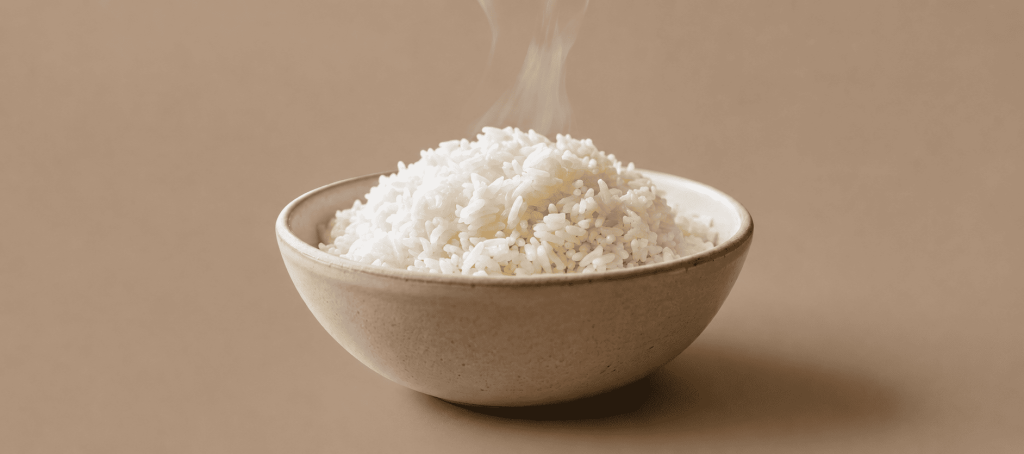
Your cat is staring at your dinner plate again, and tonight it happens to be rice. Before you flick a few grains onto the floor, it’s worth knowing the real answer — because “harmless” and “good for them” are two very different things when it comes to cats.
The short version: a little plain, cooked rice won’t hurt a healthy cat. The longer version — how much is actually safe, when rice can genuinely help, the one preparation that can land your cat at the emergency vet, and why kittens should never have it — is what most quick answers leave out. Here’s everything you need to know.
Quick Answer: Can Cats Eat Rice?
Yes — cats can safely eat small amounts of plain, fully cooked white or brown rice as an occasional treat. Rice is not toxic to cats, but it offers them almost no nutritional value, because cats are obligate carnivores built to run on meat. Keep servings to about 1 teaspoon, no more than once or twice a week, always cooked plain with no salt, oil, butter, onion, or garlic. Never feed uncooked rice, fried rice, or rice to kittens.
So, Can Cats Really Eat Rice?
Yes, but with an important asterisk. Plain cooked rice is non-toxic and generally safe for an adult cat in tiny quantities. Cats produce the digestive enzyme amylase, which lets them break down the starch in rice, so a few grains here and there won’t cause a problem for a healthy cat.
The catch is that “can eat” is not the same as “should eat.” Rice provides cats with carbohydrates and a small amount of fiber, but very little of what their bodies actually need. According to PetMD, while rice isn’t dangerous, it isn’t beneficial either — and feeding too much can do more harm than good.
So think of rice the way you’d think of a single potato chip for yourself: not poison, not nutrition, fine as a rare nibble, and a bad idea as a habit.
Why Rice Isn’t a “Real” Food for Cats
To understand the safe limits, you first have to understand cat biology.
Cats are obligate carnivores, meaning they rely on nutrients found only in animal tissue. As the Cornell Feline Health Center explains, cats evolved as hunters eating prey that is high in protein, moderate in fat, and very low in carbohydrates — and their bodies still require those general proportions today. They also need specific nutrients like taurine, an amino acid found in meat that cats cannot make themselves and that is essential for healthy heart and eye function.
Here’s what that means for rice:
- Cats can’t run efficiently on carbs. Their metabolism is built to turn protein and fat into energy, not large amounts of starch.
- Rice has no taurine, no animal protein, and no animal fat — the three things a cat’s diet is built around.
- Carbs displace better nutrients. Every bite of rice is a bite not spent on the meat-based nutrition your cat actually needs.
In short, rice is “empty calories” for a cat. That’s exactly why it can only ever be an occasional extra, never a meal.
Is Rice Ever Good for Cats? The Limited Benefits
Rice does have a few minor upsides, which is why it shows up in some cat foods and vet recommendations:
- It’s highly digestible. Plain rice is gentle and easy to break down, which is the main reason it’s sometimes used during digestive upset (more on that below).
- It’s a useful “pill pocket.” A small ball of soft rice can help disguise medication for a fussy cat.
- It works as a low-value filler. Many commercial dry foods use rice as an inexpensive carbohydrate and binding agent — but in those products it’s carefully balanced against adequate animal protein, which is very different from feeding plain rice on its own.
- Brown rice adds a little fiber. The extra fiber in brown rice may, in some cases and under veterinary guidance, help with mild constipation.
Notice that none of these benefits are about nutrition. They’re about texture, digestibility, and convenience. As Hill’s Pet notes, rice on its own will never provide complete and balanced nutrition for your cat.
When Is It OK to Give a Cat Rice?
There are really only a handful of situations where offering rice makes sense:
1. As a rare, tiny treat. If your cat is healthy and seems interested in the rice on your plate, a small bite now and then is fine.
2. To hide medication. A pinch of plain rice can help a pill go down more easily.
3. As part of a vet-directed bland diet. This is the big one people hear about. For dogs, a bland diet of rice and boiled chicken is a classic remedy for an upset stomach. For cats it’s used far less often, and it should only ever be done on your veterinarian’s advice — because cats with ongoing digestive issues usually do better on a proper therapeutic (prescription) diet formulated for felines, not a homemade rice mix.
If your vet does suggest rice for a temporary tummy upset, they’ll typically recommend a small amount of plain white rice mixed with plain boiled chicken or turkey, fed in small portions while you monitor your cat closely. Stop immediately and call your vet if symptoms worsen.
Important: Rice is not a treatment for diarrhea or vomiting on its own. Persistent digestive problems in cats can signal something serious. Always loop in your veterinarian rather than self-treating with rice.
How Much Rice Is Safe for a Cat?
This is where most owners go wrong — “a little rice” is much smaller than people assume.
The general rule of thumb: around 1 teaspoon of cooked rice, no more than once or twice a week.
To put that in context, the Cornell Feline Health Center advises that treats of any kind should make up no more than 10–15% of a cat’s daily calories. The other 85–90% must come from a complete, balanced cat food. Since the average cat only needs roughly 200–250 calories a day, that treat allowance is tiny — and rice has to share it with every other snack your cat gets.
A few practical guardrails:
- Start with just a few grains the first time, to make sure your cat tolerates it.
- Keep total servings to about a teaspoon, occasionally — not daily.
- Count it toward the treat budget, not on top of meals.
- Never replace a meal with rice. It lacks the protein and nutrients your cat needs.
Feeding more than this regularly can tip a cat into eating too many carbohydrates. Experts note that gastrointestinal trouble tends to appear once carbs make up a large share of the diet, which leads us to the risks.
White Rice vs. Brown Rice for Cats: Which Is Better?
Both are safe in small, plain, cooked amounts — but they differ slightly.
| White Rice | Brown Rice | |
|---|---|---|
| Digestibility | Easier to digest; gentler on the stomach | Higher fiber can be harder for cats to digest |
| Nutrition | Stripped of most nutrients during milling | Whole grain; retains a bit more fiber and antioxidants |
| Best for | Vet-recommended bland diets / sensitive stomachs | The occasional treat where a touch more fiber is fine |
| Bottom line | First choice for digestive upset | Marginally “healthier,” but still empty calories |
Takeaway: For a sensitive stomach or a vet-recommended bland diet, white rice is usually the better pick because it’s so easy to digest. For a casual treat, brown rice has a slightly better nutritional profile — but the difference is minor, and neither should be a regular part of your cat’s diet.
Cooked vs. Uncooked Rice: Never Feed Raw
Always cook rice thoroughly before offering any to your cat. Uncooked rice is not safe for cats. Raw rice is hard, difficult to digest, and can cause stomach upset. Dry grains contain a natural compound called lectin, which can irritate the digestive tract and cause vomiting or diarrhea if eaten in quantity.
If your cat sneaks a few raw grains off the floor, it’s usually not an emergency — but if they get into a large amount of uncooked rice, call your veterinarian and watch for digestive distress.
Rice Preparations to NEVER Feed Your Cat
The rice itself is rarely the danger — it’s what’s cooked with it. Avoid all of the following:
- Fried rice. Loaded with oil and fat (risking stomach upset or, in extreme cases, pancreatitis) and almost always seasoned with onion, garlic, and soy sauce.
- Rice cooked with onion or garlic. These are genuinely toxic. Onions, garlic, chives, and leeks belong to the Allium family, which can damage a cat’s red blood cells and cause anemia. Per the ASPCA, cats are especially susceptible, and the Merck Veterinary Manual notes that garlic is even more toxic than onion and that cats are the most sensitive species. Powdered forms (like onion or garlic powder hidden in broths and seasonings) are especially dangerous.
- Rice with salt or soy sauce. Too much sodium can cause salt toxicity, with tremors or seizures in serious cases.
- Rice with butter, oil, or rich sauces. Excess fat can trigger digestive upset.
- Rice pudding or sweetened rice dishes. Sugar and dairy are bad for cats, and anything labeled “sugar-free” may contain xylitol, which is dangerous to pets.
- Rice Krispies and other rice cereals. Heavily processed, sugary, and pointless for cats.
- Sushi. Even plain sushi rice may be seasoned with vinegar, and the raw fish, avocado, and other ingredients can be unsafe.
Rule of thumb: if it’s not plain rice cooked in nothing but water, don’t share it.
How to Safely Prepare and Serve Rice to Your Cat
If you’ve cleared it with your vet and want to offer a tiny bit of rice, do it like this:
- Cook it plain in water only — in a pot or rice cooker. No salt, oil, butter, broth, or seasoning of any kind.
- Let it cool completely to room temperature so it doesn’t burn your cat’s mouth.
- Offer a few grains first to check tolerance, working up to about a teaspoon at most.
- Mix it into their regular food or pair it with a little plain boiled chicken if your vet recommended it.
- Watch for reactions over the next 24 hours — any vomiting, diarrhea, or lethargy means stop and call your vet.
- Keep it occasional. A rare treat, never a daily ritual or meal replacement.
Can Kittens Eat Rice?
No — kittens should not eat rice. This is one of the clearest “skip it” cases.
Kittens are growing rapidly and have intense needs for protein, fat, taurine, and other nutrients that support healthy development. Filling them up with empty carbohydrates like rice displaces the nutrition they desperately need and is harder for their immature digestive systems to process. Kittens should eat only a complete, balanced kitten food formulated for their life stage. Save the “people food” experiments for adulthood — and even then, keep them minimal.
Cats With Health Conditions: Extra Caution
Some cats should steer clear of rice entirely unless a vet specifically approves it:
- Diabetic cats: Rice is a carbohydrate that raises blood sugar — generally a poor choice for cats managing diabetes.
- Overweight cats: Extra carbs mean extra calories. In cats, obesity is linked to diabetes, arthritis, and other problems, so weight-management cats don’t have room in their diet for empty filler.
- Cats with kidney or heart disease: These cats usually need carefully formulated, veterinarian-recommended diets. Don’t add anything without checking first.
- Cats with food sensitivities: Every cat’s gut is different. Rice settles one cat’s stomach and upsets another’s, so monitor closely and stop at the first sign of trouble.
When in doubt, ask your veterinarian before offering rice to a cat with any medical condition.
Risks and Side Effects of Too Much Rice
Feeding rice too often or in too-large portions can cause:
- Digestive upset — diarrhea, bloating, gas, and stomach discomfort from too many carbohydrates.
- Weight gain and obesity — empty calories add up, especially in indoor or less-active cats.
- Nutritional imbalance — rice that displaces meat-based food can, over time, shortchange your cat on protein and essential nutrients like taurine.
- Long-term health issues — chronic over-feeding of carbs is associated with conditions like feline diabetes.
None of this comes from an occasional teaspoon. It comes from rice becoming a regular, oversized part of the diet.
Warning Signs and When to Call the Vet
Contact your veterinarian — or an animal poison control center — if, after eating rice (especially a seasoned dish or a large amount of uncooked rice), your cat shows:
- Vomiting or diarrhea that doesn’t quickly resolve
- Lethargy, weakness, or pale gums (possible signs of Allium/onion-garlic toxicity)
- Loss of appetite, drooling, or signs of abdominal pain
- Tremors or seizures (possible salt toxicity or other poisoning)
Keep these emergency numbers handy:
- ASPCA Animal Poison Control Center: (888) 426-4435 — aspca.org/pet-care/animal-poison-control
- Pet Poison Helpline: (855) 764-7661 — petpoisonhelpline.com
(A consultation fee may apply. When in doubt, don’t wait for symptoms — call.)
Better Treat Alternatives to Rice
Since cats thrive on animal protein, the best “treats” lean meaty. Consider:
- Plain cooked chicken, turkey, or fish (boneless, skinless, unseasoned)
- Plain cooked egg
- A small amount of plain canned pumpkin (often gentler and more useful than rice for mild digestive support — check with your vet)
- Commercial cat treats formulated to be nutritionally appropriate
- Bone broth made with no onion or garlic, for hydration and flavor
These give your cat something closer to what its body is actually designed to use.
The Bottom Line
So, can cats eat rice? Yes — a small amount of plain, fully cooked rice is safe for a healthy adult cat as an occasional treat, and it’s sometimes used (under veterinary guidance) to help settle a sensitive stomach. But rice offers cats almost no real nutrition, so it should never replace meals or become a daily habit.
Stick to the essentials: about a teaspoon, no more than once or twice a week, cooked plain in water, never fried or seasoned, and never for kittens. Keep treats under 10–15% of daily calories, watch for any digestive reaction, and check with your veterinarian before adding rice — especially if your cat has diabetes, kidney disease, weight concerns, or a sensitive stomach.
When in doubt, remember what your cat truly is: a meat-loving little hunter. Rice is a harmless novelty at best — the real nutrition belongs to the protein in their bowl.
Frequently Asked Questions
Is rice safe for cats? Plain, cooked rice is safe for healthy adult cats in very small amounts. It’s non-toxic but nutritionally empty, so it should only ever be an occasional treat, never a regular food or meal replacement.
How much rice can a cat eat? About one teaspoon of cooked rice, no more than once or twice a week. Treats of all kinds should stay under 10–15% of your cat’s daily calories.
Can cats eat white rice or brown rice? Both are fine in small, plain, cooked amounts. White rice is easier to digest (better for sensitive stomachs), while brown rice has slightly more fiber and antioxidants but is harder to digest.
Can rice help a cat with diarrhea or an upset stomach? Sometimes, but only under veterinary guidance and usually as plain white rice mixed with boiled chicken. Cats with ongoing digestive issues typically do better on a proper therapeutic diet, so call your vet rather than self-treating.
Can kittens eat rice? No. Kittens need nutrient-dense, protein-rich food for healthy growth, and empty carbohydrates like rice can crowd out the nutrition they need. Feed kittens only complete, balanced kitten food.
Can cats eat fried rice? No. Fried rice is high in fat and almost always contains onion, garlic, soy sauce, and salt — all harmful or toxic to cats.
Can cats eat uncooked rice? No. Raw rice is hard to digest and can cause stomach upset. If your cat eats a large amount of uncooked rice, call your veterinarian.
Why is rice in my cat’s commercial food if cats don’t need carbs? In commercial foods, rice acts as an inexpensive carbohydrate and binder, balanced against adequate animal protein. That’s very different from feeding plain rice on its own, which provides no balanced nutrition.
Can cats eat rice every day? No. Daily rice adds unnecessary carbohydrates and calories that can lead to digestive upset, weight gain, and nutritional imbalance over time. Keep it occasional.
This article is for general informational purposes only and is not a substitute for professional veterinary advice. Every cat is different — always consult your veterinarian before adding any new food to your cat’s diet or if your cat shows signs of illness.