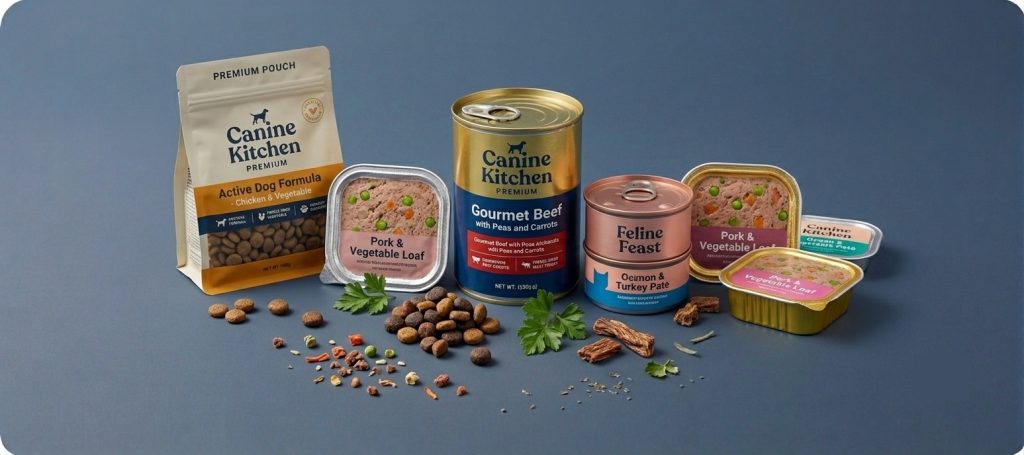
If you share your home with both a cat and a dog, you’ve probably witnessed the curious scenario: your cat sneaking over to the dog’s bowl for a quick nibble. Or perhaps you ran out of cat food and wondered whether a scoop of dog food would do the trick — just this once. It’s a common question among multi-pet households, and the answer is more nuanced than a simple yes or no.
Can cats eat dog food? The short answer is that a small, occasional amount of dog food is unlikely to cause serious harm, but it should never become a habit, and it absolutely cannot replace a proper cat diet. Cats and dogs have dramatically different nutritional requirements, and food formulated for dogs simply does not meet the biological needs of a cat.
This comprehensive guide explains exactly why cat and dog nutrition differ, what specific nutrients cats need that dog food fails to provide, what symptoms to watch for if your cat regularly eats dog food, and how to handle emergency situations where cat food isn’t available.
Cat Nutrition vs. Dog Nutrition: A Fundamental Difference
To understand why dog food is inappropriate for cats, you first need to understand how profoundly different these two species are from a nutritional standpoint — despite the fact that they often live side by side in our homes.
Dogs are omnivores, meaning they evolved to eat and derive nutrition from both animal and plant sources. Their digestive systems and metabolic pathways are adapted to handle a wide variety of foods, including grains, vegetables, fruits, and meats. This flexibility means dog food can contain a more varied macronutrient profile.
Cats, on the other hand, are obligate carnivores — a term that means they are biologically required to eat animal-based protein to survive. Unlike dogs, cats have evolved to rely almost exclusively on meat for their energy and nutrition. Over thousands of years, their bodies have lost the ability to synthesize certain essential nutrients that dogs and humans can produce on their own, making it imperative that these nutrients come from animal tissue in their diet.
This is not just a preference or behavioral quirk. It is a deep metabolic reality. Feeding a cat a diet designed for a dog is akin to feeding a lion vegetable soup — technically it contains calories, but it misses the entire point of what that animal needs to thrive.
Can Cats Eat Dog Food? The Short Answer
Yes, cats can physically eat dog food. No, they should not eat it as a regular meal or dietary substitute.
If your cat sneaks a few bites from your dog’s bowl on a single occasion, it is very unlikely to cause a medical emergency. Dog food is not inherently toxic to cats (with some caveats around specific ingredients). However, it is nutritionally deficient for cats in several critical ways.
The danger is not in one accidental bite — it’s in substitution. If dog food becomes a cat’s primary or frequent food source, the cat will begin to suffer from nutrient deficiencies that can lead to serious, sometimes irreversible, health conditions including blindness, heart disease, and neurological damage.
The bottom line: dog food is not a safe long-term food source for cats, even if it seems similar on the surface.
What Happens If a Cat Eats Dog Food Once?
A single exposure to dog food is unlikely to cause harm to an otherwise healthy adult cat. The cat may experience minor digestive upset such as:
- Soft stools or mild diarrhea — Dog food has a different fiber content and protein-to-carbohydrate ratio, which can temporarily disrupt a cat’s digestive system.
- Vomiting — Some cats have sensitive stomachs and may vomit after eating unfamiliar food.
- Decreased appetite for their own food — Some cats may find certain dog foods palatable and begin to favor it, which can make it harder to transition them back to proper cat food.
In most cases, a one-time incident will resolve on its own within 24 hours. If vomiting or diarrhea persists beyond a day or becomes severe, consult your veterinarian.
One exception to watch for: if the dog food contains ingredients that are outright toxic to cats, such as certain artificial sweeteners (like xylitol, which has been found in some specialty pet foods), onion powder, garlic powder, or propylene glycol (sometimes used in semi-moist dog foods), even a single ingestion could be dangerous. Always check the ingredient list if your cat has consumed dog food.
What Happens If a Cat Eats Dog Food Regularly?
This is where the real danger lies. A cat that regularly consumes dog food instead of species-appropriate cat food will gradually develop serious nutritional deficiencies. Because many of these deficiencies develop slowly, the symptoms may not be immediately obvious — but the damage they cause can be cumulative and severe.
Here’s what prolonged consumption of dog food can do to a cat:
Dilated Cardiomyopathy (DCM): Taurine deficiency — one of the most critical consequences of eating dog food — is directly linked to DCM, a life-threatening form of heart disease. The heart muscle weakens, the chambers enlarge, and the heart loses its ability to pump blood efficiently. This condition can be fatal.
Blindness and Retinal Degeneration: Cats require preformed Vitamin A and taurine for healthy vision. Dog food does not provide adequate amounts of either. Taurine deficiency in particular causes a condition called feline central retinal degeneration (FCRD), which leads to permanent vision loss.
Neurological Problems: Without sufficient niacin, arachidonic acid, and other essential fatty acids, cats can develop neurological issues, poor coat condition, and immune dysfunction.
Muscle Wasting and Weight Loss: Insufficient protein — and specifically the right amino acid profile — causes cats to break down their own muscle tissue for energy, leading to muscle wasting and eventual weakness.
Reproductive Failure: Queens (female cats) that eat nutritionally inadequate diets may experience failed pregnancies, give birth to weak or stillborn kittens, or produce milk that is insufficient for their young.
Liver Disease: Cats have high protein metabolic requirements. Low-protein diets (like many dog foods) can contribute to hepatic lipidosis (fatty liver disease), particularly if the cat begins eating less overall.
Key Nutrients Cats Need That Dog Food Lacks
The crux of the problem lies in six specific nutrients that cats cannot produce on their own and that dog food is not formulated to supply in cat-appropriate quantities.
Taurine
Taurine is an amino acid (technically a sulfonic acid) that is absolutely essential for cats. Most mammals, including dogs and humans, can synthesize taurine from other amino acids in their diet. Cats have extremely limited ability to do this. They must consume taurine directly through their food.
Taurine is critical for:
- Heart muscle function
- Retinal health and vision
- Immune system function
- Bile salt production and fat digestion
- Fetal development and kitten growth
Dog food contains some taurine, but not in quantities sufficient for a cat’s daily requirements. The Association of American Feed Control Officials (AAFCO) mandates a minimum of 0.1% taurine in dry cat food and 0.2% in wet cat food — requirements that dog food is not held to.
Taurine deficiency in cats is not theoretical — it was responsible for a widespread epidemic of feline heart disease in the 1980s before the link was identified and cat food formulations were updated. Today, all reputable commercial cat foods are taurine-supplemented. Dog food generally is not, or not at levels cats require.
Arachidonic Acid
Arachidonic acid is an omega-6 fatty acid that dogs can synthesize from linoleic acid. Cats cannot. They need to consume it directly from animal fats.
This fatty acid plays important roles in:
- Skin and coat health
- Kidney function
- Reproductive health
- Blood clotting and inflammatory response
Dog food is not formulated to contain enough arachidonic acid for cats, and plant-based fat sources in dog food will not compensate, because cats lack sufficient delta-6-desaturase enzyme activity to convert plant-derived fatty acids into arachidonic acid.
Vitamin A (Preformed)
Dogs and humans can convert beta-carotene (found in plant foods like carrots and sweet potatoes) into Vitamin A. Cats cannot perform this conversion efficiently. They require preformed Vitamin A, which comes from animal liver and other organ meats.
Vitamin A is critical for:
- Vision (particularly night vision)
- Immune function
- Skin and coat maintenance
- Bone growth
- Reproduction
Many dog foods include plant-based Vitamin A precursors, but not sufficient preformed Vitamin A for cats. A cat relying on dog food as a primary diet will eventually develop Vitamin A deficiency, with symptoms including night blindness, poor coat condition, and reproductive failure.
Vitamin D
Cats have very limited ability to synthesize Vitamin D through sun exposure (unlike humans). They are dependent on dietary sources — primarily animal-based — to meet their needs. While dog food does contain Vitamin D, the levels are calibrated for dogs, not for cats with higher metabolic demands.
Vitamin D deficiency in cats can cause:
- Bone disorders
- Muscle weakness
- Poor immune function
Niacin (Vitamin B3)
Most mammals can synthesize niacin from the amino acid tryptophan. Cats have very limited capacity to do this because they use tryptophan preferentially in other metabolic pathways. They must therefore obtain most of their niacin from dietary animal tissue.
Dog food that contains a high proportion of plant-based proteins or carbohydrates may not deliver niacin in a bioavailable form sufficient for cats. Niacin deficiency can cause weight loss, poor coat condition, and in severe cases, systemic illness.
Protein Content
Cats need significantly more protein than dogs. The AAFCO minimum for adult cat food is 26% protein on a dry matter basis. For growing kittens, it’s 30%. Dog food minimums are lower — 18% for adult maintenance — and many commercial dog foods contain a higher proportion of carbohydrates relative to protein than is appropriate for a cat’s metabolism.
Cats use dietary protein not just for tissue repair and enzyme production (as dogs do), but also as their primary energy source. Unlike dogs, cats do not downregulate protein metabolism when protein intake decreases — their livers continue to break down amino acids for energy regardless of availability. This means a low-protein diet does not just slow growth; it actively causes tissue catabolism (self-cannibalization of the body’s own proteins).
Arginine
Arginine is an amino acid that is critical for the urea cycle in cats. Without adequate arginine, ammonia accumulates in the blood — a potentially fatal condition called hyperammonemia. Cats are particularly sensitive to arginine deficiency because, unlike dogs, they cannot adequately compensate when dietary arginine is absent.
A single arginine-deficient meal can cause symptoms within hours in cats, including excessive salivation, vomiting, neurological signs, and in severe cases, death. Most dog foods contain arginine, but not always at levels AAFCO requires for cat food (0.62% on a dry matter basis for adult cats). This is a smaller concern than taurine but worth noting, especially for cats with health conditions.
Why Cats Are Obligate Carnivores
The term “obligate carnivore” means an animal that biologically must eat meat to survive. This is not a lifestyle preference — it is embedded in feline physiology and evolution.
Here is what makes cats uniquely different from omnivores:
Taste receptors: Cats lack functional sweet taste receptors. They have no ability to taste sweetness because they have no evolutionary need to seek out carbohydrates or sugars. Dogs and humans have these receptors because plant foods with natural sugars were part of their ancestral diets.
Digestive tract length: Cats have a shorter gastrointestinal tract relative to body size compared to omnivores. This is an adaptation to rapidly digesting dense animal protein, not fermenting plant material over long periods.
Liver enzymes: A cat’s liver continuously runs enzymes that break down amino acids for energy — even when dietary protein is low. This is why cats cannot simply “switch” to a plant-heavy diet without health consequences. Their metabolic systems are locked into a protein-burning mode.
Carbohydrate metabolism: Cats have limited amylase production (the enzyme that breaks down starch), relatively low glucokinase activity (an enzyme involved in glucose metabolism), and minimal ability to upregulate glucose disposal after a carbohydrate-rich meal. High-carbohydrate dog food can contribute to blood sugar dysregulation in cats, potentially contributing to feline diabetes over time.
Water intake behavior: Wild cats and domestic cats evolved getting most of their moisture from prey. They have a low thirst drive compared to dogs and are not physiologically inclined to drink enough water when fed dry food. This is why wet cat food is generally recommended — particularly for urinary health — but it also illustrates the broader point that cats are deeply adapted to a fresh-prey diet.
Differences Between Cat Food and Dog Food Labels
When you compare the nutritional labels of cat food and dog food side by side, the differences become clear:
| Nutrient | AAFCO Minimum — Cat Food | AAFCO Minimum — Dog Food |
|---|---|---|
| Crude Protein (adult) | 26% DM | 18% DM |
| Crude Fat (adult) | 9% DM | 5.5% DM |
| Taurine (dry food) | 0.1% DM | Not required |
| Taurine (wet food) | 0.2% DM | Not required |
| Arachidonic Acid | Required | Not required |
| Vitamin A (IU/kg) | 3,332 IU/kg min | 1,250 IU/kg min |
| Niacin (mg/kg) | 60 mg/kg min | 13.6 mg/kg min |
| Arginine | 1.25% DM (kitten) | 0.51% DM (adult) |
(DM = Dry Matter basis)
These AAFCO requirements exist for a reason. The regulatory standards for cat food are intentionally more stringent in several key areas because cats’ physiology demands it. Dog food manufacturers meet dog standards — not cat standards.
Additionally, cat food tends to:
- Be more calorie-dense per ounce
- Contain higher moisture (especially wet varieties)
- Include more animal-derived fat for palatability and arachidonic acid content
- Be more heavily flavored with animal proteins to appeal to a carnivore’s palate
Signs Your Cat Has Been Eating Dog Food Too Often
If you suspect your cat has been regularly eating dog food (whether from sneaking the dog’s bowl or through a dietary mix-up), watch for these warning signs:
Cardiovascular signs:
- Labored or rapid breathing
- Lethargy and exercise intolerance
- Weakness, especially in the hind end
- Fainting or collapse
Ocular signs:
- Dilated pupils that don’t respond normally to light
- Bumping into objects
- Reluctance to move in dim light
- Cloudy eyes
Gastrointestinal signs:
- Chronic or recurring diarrhea
- Vomiting more frequently than normal
- Decreased appetite or food refusal
- Bloating or abdominal discomfort
Coat and skin signs:
- Dull, dry, or flaky coat
- Excessive shedding
- Skin inflammation or lesions
- Hair loss
Musculoskeletal signs:
- Muscle wasting (particularly along the spine and hindquarters)
- Weakness or difficulty jumping
- Lethargy and reduced playfulness
Neurological signs:
- Disorientation or confusion
- Seizures (in severe cases of ammonia toxicity from arginine deficiency)
- Poor coordination
If you observe any of these signs, consult your veterinarian promptly. Early intervention — particularly for taurine deficiency and its associated heart disease — can reverse some of the damage if caught in time.
Can Kittens Eat Dog Food?
Kittens are even more vulnerable than adult cats when it comes to nutritional deficiency. Kittens are in rapid growth phases that demand very high levels of protein, taurine, arachidonic acid, Vitamin A, and arginine. Their requirements for these nutrients are substantially higher than adult cats.
Feeding a kitten dog food — even briefly — can result in:
- Stunted growth
- Skeletal deformities
- Heart and vision problems that manifest at an early age
- Neurological deficits
- Immune system weakness
Kittens that are orphaned or separated from their mother and cannot access kitten-appropriate food should be fed a veterinary-approved kitten milk replacer or kitten-specific wet food. Dog food — including puppy food — is never an appropriate substitute.
Can Senior Cats Eat Dog Food?
Senior cats (generally defined as cats 11 years and older) are also at heightened risk when exposed to nutritionally inappropriate food. As cats age, their ability to absorb nutrients from food decreases. They become more sensitive to protein quality and quantity, and they may already be managing chronic conditions like kidney disease, hyperthyroidism, or arthritis.
Dog food fed to a senior cat can:
- Exacerbate existing kidney disease (due to inappropriate phosphorus levels)
- Fail to meet the higher digestible protein needs of senior cats
- Worsen taurine status in cats already at cardiovascular risk
- Contribute to muscle wasting in cats with reduced nutrient absorption
If you have a senior cat with specific health conditions, their diet is especially important. Never substitute dog food and always consult your veterinarian before making any dietary changes.
Emergency Situations: What To Do If You Run Out of Cat Food
Life happens. Sometimes you run out of cat food at an inconvenient hour and the nearest pet store is closed. Here’s what to do — and what not to do:
Safe Short-Term Options (1-2 meals only)
Cooked, plain chicken: Boneless, skinless chicken breast cooked without seasoning, oils, garlic, or onion is safe for cats in small amounts. It is a high-quality protein source.
Cooked, plain turkey: Similar to chicken — plain and unseasoned is fine for a meal or two.
Cooked, plain fish: Salmon, tuna, or whitefish cooked without seasoning. Avoid canned tuna in oil or with added salt. Note: canned tuna in water is acceptable as a one-time fix but should not become a regular staple due to mercury content and nutritional imbalance.
Plain cooked eggs: Scrambled or boiled eggs with no seasoning, butter, or oil. Eggs are a complete protein source and safe for cats in small quantities.
Plain cooked shrimp: Peeled, deveined, cooked shrimp without seasoning.
What to Avoid in Emergencies
- Dog food — As covered throughout this article, it lacks essential cat nutrients.
- Raw meat without proper handling — Risk of bacterial contamination (Salmonella, Listeria).
- Onions, garlic, leeks, chives — Highly toxic to cats even in small amounts.
- Grapes, raisins, or currants — Toxic to cats.
- Xylitol — Found in some peanut butters and sugar-free products; toxic to cats.
- Milk or dairy — Most adult cats are lactose intolerant. Small amounts won’t cause toxicity, but can cause GI upset.
- Raw dough or alcohol — Extremely dangerous.
The Bottom Line on Emergencies
A single missed meal or one meal of plain cooked chicken will not harm your cat. Cats can go 12-24 hours without food without serious health risk (though they should always have access to water). Plan ahead by keeping an emergency backup supply of canned or dry cat food. Subscribe to automatic delivery services or keep a few extra cans on hand for situations like this.
What to Feed Your Cat Instead
Now that we’ve established what cats should not eat, here is a guide to what they should eat for optimal health.
High-Quality Commercial Cat Food
The simplest and most reliable way to meet your cat’s nutritional needs is a high-quality commercial cat food that carries the AAFCO statement: “formulated to meet the nutritional levels established by the AAFCO Cat Food Nutrient Profiles” or “Animal feeding tests using AAFCO procedures substantiate.”
Look for foods that list a named animal protein (chicken, turkey, salmon, beef) as the first ingredient — not a generic “meat by-product” or a grain or vegetable.
Wet vs. Dry Cat Food:
| Factor | Wet Food | Dry Food |
|---|---|---|
| Moisture content | 70-80% | 8-10% |
| Protein content | Generally higher | Varies widely |
| Carbohydrate content | Generally lower | Generally higher |
| Urinary health | Better (more hydration) | May contribute to urinary issues |
| Dental health | Less beneficial | Some benefit from kibble texture |
| Palatability | Typically higher | Convenient and cost-effective |
| Shelf life | Short once opened | Long shelf life |
Many veterinary nutritionists recommend feeding primarily or exclusively wet food, particularly for male cats (who are prone to urinary blockages), cats with kidney disease, and cats with low thirst drives. A combination of wet and dry food is also a common and reasonable approach.
Raw Diets
Some cat owners choose raw food diets (sometimes called BARF diets — Biologically Appropriate Raw Food). When properly formulated with the correct nutrient balance, raw diets can be appropriate for cats. However, they carry risks:
- Bacterial contamination (Salmonella, Listeria, Campylobacter) — risk to both the cat and human family members
- Parasites (Toxoplasma gondii in raw pork and game meat)
- Nutritional imbalance — improperly formulated raw diets can cause just as many deficiencies as dog food if not carefully planned
If you are interested in a raw diet for your cat, consult a board-certified veterinary nutritionist and ensure the diet is balanced and sourced from reputable suppliers.
Home-Cooked Diets
Some pet owners prefer to cook for their cats. This is possible, but it is extremely challenging to balance a home-cooked cat diet without professional guidance. Cats need a very precise ratio of nutrients, and common home-cooked mistakes include:
- Insufficient calcium (leading to bone disease)
- Taurine deficiency (cooked meat loses taurine)
- Inadequate Vitamin A and D
- Incorrect phosphorus-to-calcium ratio
If you want to cook for your cat, work with a veterinary nutritionist who can formulate a complete and balanced recipe. Never guess.
Treats and Supplemental Foods
Treats should make up no more than 10% of a cat’s daily caloric intake. Look for cat-specific treats that use named animal proteins. Avoid dog treats, human snack foods, or products with artificial sweeteners, onion, garlic, or excessive salt.
Frequently Asked Questions
Q: My cat ate a whole bowl of dog food. Should I go to the emergency vet?
A: If it was a single incident and your cat appears normal — alert, not vomiting excessively, no labored breathing — you likely do not need emergency care. Monitor your cat for the next 24-48 hours for signs of GI distress (diarrhea, repeated vomiting). If symptoms are severe or your cat seems lethargic or distressed, contact your vet. Check the dog food ingredient list for toxic ingredients like xylitol, garlic powder, or onion powder — these warrant immediate veterinary attention.
Q: Is wet dog food safer for cats than dry dog food?
A: Neither wet nor dry dog food is safe as a regular diet for cats. Wet dog food may contain higher moisture, but it still lacks the taurine, arachidonic acid, preformed Vitamin A, and appropriate protein levels that cats require. The form (wet vs. dry) does not resolve the fundamental nutritional deficiency issue.
Q: Can cats eat puppy food?
A: Puppy food is formulated for young, growing dogs and tends to have higher protein and fat than adult dog food. While slightly closer to cat food in some respects, it still does not meet cat nutritional standards — particularly for taurine, arachidonic acid, and preformed Vitamin A. Puppy food should not be fed to cats.
Q: My vet says my cat needs a low-protein diet. Is dog food okay then?
A: No. Some cats with advanced kidney disease are prescribed low-phosphorus, moderate-protein diets — but these are specially formulated veterinary prescription diets for cats, not dog food. The protein types, amino acid profiles, and other nutrient ratios in prescription feline kidney diets are entirely different from dog food. Always follow your vet’s specific dietary recommendation.
Q: Why does my cat prefer dog food over cat food?
A: This can happen for a few reasons. Some dog foods use strongly flavored gravy or meat-based broths that cats find appealing. Cats may also be drawn to the novelty of a different food. If your cat consistently refuses cat food in favor of dog food, consult your vet — it may indicate a palatability issue with their current cat food brand, or there may be an underlying health issue affecting their appetite.
Q: Can cats drink dog milk replacer?
A: No. Kitten milk replacer is specifically formulated for kittens’ unique nutritional needs, including appropriate levels of taurine and fat. Dog or puppy milk replacers are formulated for puppies and are not appropriate for kittens or cats. Using the wrong milk replacer for orphaned neonatal kittens can be life-threatening.
Q: Are there any dog foods that are safe for cats?
A: No commercial dog food is designed or approved as a complete and balanced diet for cats. Even if a specific dog food had adequate protein levels, it would still be deficient in taurine (which must be explicitly supplemented in cat food), arachidonic acid, preformed Vitamin A, and other feline-specific nutrients. There is no category of dog food that is safe for cats as a regular diet.
Q: What if I have a mixed-breed dog-cat household? How do I keep them from eating each other’s food?
A: This is a very common concern. Practical strategies include:
- Feeding pets in separate rooms with the door closed
- Using microchip-activated feeders that open only for the registered pet
- Feeding on raised platforms cats can reach but dogs cannot
- Establishing strict, supervised feeding times and removing bowls when the meal is done
- Training your dog to “leave it” on command
Conclusion
So, can cats eat dog food? The answer is: not as a regular diet, and never as a substitute for cat food. A single accidental bite is unlikely to send your cat to the emergency vet, but even occasional substitution is nutritionally risky — and chronic feeding of dog food to a cat can result in taurine deficiency, dilated cardiomyopathy, blindness, neurological damage, and reproductive failure.
Cats are not small dogs. They are obligate carnivores with a precise set of nutritional requirements that have been shaped by millions of years of evolution as specialized meat-eaters. Dog food, no matter how premium the brand or how high the quality, is formulated for an entirely different species with entirely different metabolic needs.
The best thing you can do for your cat is to provide a high-quality, AAFCO-certified cat food appropriate for their life stage — kitten, adult, or senior. If you are ever unsure about your cat’s nutrition, consult your veterinarian or a board-certified veterinary nutritionist. They can help you select the right diet for your individual cat’s health status, lifestyle, and age.
When in doubt, keep the cat food and the dog food in separate bowls — and keep those bowls far apart.
This article is intended for informational purposes only and should not be used as a substitute for professional veterinary advice, diagnosis, or treatment. Always consult your veterinarian with any questions regarding your pet’s health or nutrition.