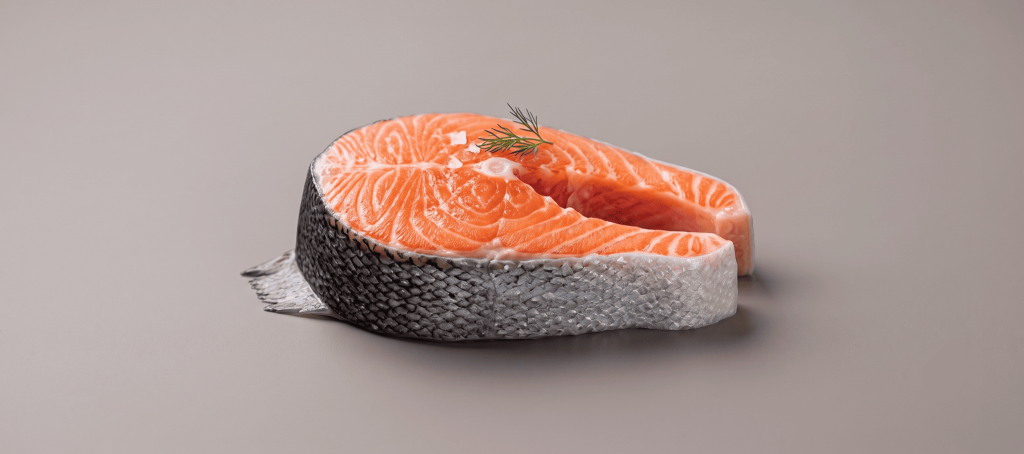
Your cat just heard the can opener — or watched you pull a salmon fillet from the fridge — and now they’re doing that intense, unblinking stare that says “that’s mine.”
And honestly? They might have a point.
Salmon is one of the very few human foods that veterinarians actually endorse as a cat treat. It’s packed with high-quality animal protein, omega-3 fatty acids, and taurine — nutrients cats genuinely need.
But there’s a critical caveat: raw salmon and cooked salmon are two entirely different things for your cat’s health. One is a nutritious treat. The other contains an enzyme that can systematically destroy your cat’s nervous system.
Here’s the complete raw vs. cooked breakdown — backed by veterinary science and clinical evidence.
🔍 Quick Check: Not sure if a food is safe for your cat? Use our Cat Food Safety Checker to instantly verify any food — including salmon — against a veterinary-reviewed database. It takes 2 seconds.
The Veterinary Verdict: Can Cats Eat Salmon?
Yes — but ONLY cooked, and only in moderation.
According to the ASPCA, properly cooked salmon is not toxic to cats. In fact, salmon is a common protein source in many high-quality commercial cat foods. However, raw salmon carries serious health risks that most cat owners aren’t aware of.
Here’s the quick-reference breakdown:
| Factor | Verdict |
|---|---|
| Toxic to cats? | No (cooked salmon) |
| Raw salmon safe? | NO — causes thiamine deficiency, carries bacteria and parasites |
| Nutritionally beneficial? | Yes — excellent source of protein, omega-3s, and taurine |
| Safe as a treat? | Yes — cooked, boneless, unseasoned, in moderation |
| Recommended by vets? | Yes — one of the best human food treats for cats |
| Sushi-grade raw salmon? | Still NO — “sushi-grade” doesn’t eliminate thiaminase or all pathogens |
| Safe for kittens? | Yes, in small amounts (cooked, boneless only) |
Why Salmon Is Genuinely Good for Cats
Unlike most human foods, salmon actually aligns with what cats are biologically designed to eat. The Cornell University College of Veterinary Medicine confirms that cats are obligate carnivores requiring animal-based proteins. Salmon delivers exactly that — plus several nutrients cats specifically need.
Nutritional Profile: Cooked Salmon for Cats
| Nutrient (per 100g cooked Atlantic salmon) | Amount | Why It Matters for Cats |
|---|---|---|
| Protein | ~25g | High-quality, complete animal protein — exactly what obligate carnivores need |
| Omega-3 (EPA + DHA) | ~2.2g | Anti-inflammatory; supports skin, coat, joints, kidneys, and heart — cats cannot convert plant-based ALA to EPA/DHA efficiently |
| Taurine | Present naturally | Essential amino acid cats cannot synthesize — deficiency causes dilated cardiomyopathy (heart disease) and retinal degeneration |
| Vitamin B12 | ~3.2μg | Critical for red blood cell production and neurological function |
| Vitamin B6 | ~0.6mg | Supports metabolism and immune function |
| Niacin (B3) | ~10mg | Cats cannot synthesize niacin from tryptophan — must obtain it from diet |
| Selenium | ~41μg | Powerful antioxidant; supports thyroid function |
| Fat | ~8g (moderate) | Provides energy; carry fat-soluble vitamins; but portion control is important |
The Omega-3 Advantage
This is where salmon truly shines for cats. According to VCA Animal Hospitals, omega-3 fatty acids (EPA and DHA) provide documented benefits for cats including:
- Skin and coat health — reduced dryness, flaking, and excessive shedding
- Anti-inflammatory effects — helps manage allergies, arthritis, and inflammatory bowel disease
- Kidney support — may slow progression of chronic kidney disease
- Heart health — supports cardiovascular function
- Brain development — DHA is critical for kitten brain and eye development
Cats cannot efficiently convert plant-based omega-3s (like flaxseed) into the active EPA and DHA forms. Marine sources like salmon are the most bioavailable way for cats to obtain these essential fatty acids.
🚨 Raw Salmon: The Triple Threat
Never feed your cat raw salmon. Not even “sushi-grade.” Not even “fresh from the fishmonger.”
Raw salmon poses three distinct, serious dangers to cats:
Threat #1: Thiaminase — The Vitamin B1 Destroyer
This is the danger most cat owners have never heard of — and it’s the most insidious.
Raw salmon (and many other raw fish species) contains an enzyme called thiaminase. According to the Merck Veterinary Manual, thiaminase destroys thiamine (vitamin B1) in the digestive tract before the body can absorb it.
Why this is devastating for cats:
- Cats have a high daily thiamine requirement — higher than most mammals relative to body weight
- Cats cannot store thiamine effectively — they need consistent daily intake
- Thiamine is essential for carbohydrate metabolism and nervous system function
- Deficiency leads to polioencephalomalacia — softening and death of brain gray matter
Symptoms of thiamine deficiency progress through stages:
| Stage | Symptoms | Timeline |
|---|---|---|
| Early | Loss of appetite, vomiting, lethargy | Days to weeks of raw fish feeding |
| Moderate | Incoordination (ataxia), stumbling, circling | Weeks of ongoing deficiency |
| Severe | Ventral neck flexion (chin tucked to chest), dilated pupils, vision loss, tremors | Continued deficiency |
| Critical | Seizures, coma, death | Without treatment |
The critical detail: Thiaminase is destroyed by cooking. Heating salmon to an internal temperature of 145°F (63°C) or above completely neutralizes the enzyme, making the thiamine in the fish fully available for your cat to absorb.
A single serving of raw salmon won’t cause deficiency — but regular or repeated raw fish feeding absolutely can, and the damage can become permanent if not caught early.
Threat #2: Bacterial Contamination
The FDA and CDC both warn against feeding raw fish and meat to pets. Raw salmon can harbor:
- Salmonella — causes fever, lethargy, vomiting, bloody diarrhea
- Listeria monocytogenes — particularly dangerous for immunocompromised cats
- E. coli — gastrointestinal infection
- Vibrio species — associated with raw seafood
Cross-contamination risk: Even if your cat doesn’t become symptomatic, they can shed Salmonella in their saliva and feces for weeks — posing a risk to children, elderly family members, and immunocompromised individuals in your household.
“Sushi-grade” is not safe for cats. The “sushi-grade” designation is an unregulated marketing term — it doesn’t guarantee the absence of bacteria, and it certainly doesn’t destroy thiaminase.
Threat #3: Parasites
Raw salmon can contain parasites including:
- Anisakis (herring worm) — causes anisakiasis; severe GI pain and inflammation
- Diphyllobothrium (broad fish tapeworm) — intestinal parasite that can grow up to several meters
- Nanophyetus salmincola — the fluke responsible for Salmon Poisoning Disease in dogs (cats appear resistant to SPD, but the fluke itself can still cause intestinal irritation)
Cooking to 145°F (63°C) kills all common fish parasites. Freezing at -4°F (-20°C) for 7 days also kills most parasites, but does not destroy thiaminase or bacteria.
⚠️ Bottom line: There is no safe way to feed raw salmon to your cat. Cooking is the only preparation method that eliminates all three threats simultaneously.
Cooked Salmon: The Safe (and Beneficial) Option
When properly prepared, cooked salmon is one of the healthiest treats you can offer your cat. Here’s why:
Benefits of Cooked Salmon for Cats
✅ High-quality animal protein — species-appropriate for obligate carnivores
✅ Rich in omega-3 EPA and DHA — anti-inflammatory, skin/coat, kidney, heart support
✅ Natural taurine source — prevents heart disease and blindness
✅ Thiaminase destroyed by heat — full B1 absorption restored
✅ Bacteria and parasites killed — safe for GI tract
✅ Highly palatable — most cats love the taste and aroma
✅ Lower mercury than tuna — safer for regular occasional use
How to Cook Salmon for Your Cat
The best methods are:
- Baked/Roasted — 375°F (190°C) for 12–15 minutes until internal temp reaches 145°F (63°C)
- Steamed — preserves the most omega-3 content; 8–10 minutes
- Poached — gentle cooking in plain water; 10–12 minutes
- Grilled (plain) — no oil or seasoning
Always:
- Cook plain — no oil, butter, salt, garlic, onion, lemon, dill, or any seasoning
- Remove all bones — even small pin bones (use tweezers)
- Remove skin (or serve it only if it was cooked plain and boneless)
- Let it cool to room temperature before serving
- Flake into small, manageable pieces
Raw vs. Cooked: The Complete Comparison
| Factor | Raw Salmon | Cooked Salmon |
|---|---|---|
| Thiaminase | ✅ Present — destroys vitamin B1 | ❌ Destroyed by heat — safe |
| Bacteria (Salmonella, E. coli, Listeria) | ✅ Present — infection risk | ❌ Killed by cooking — safe |
| Parasites (Anisakis, tapeworm) | ✅ Present — infestation risk | ❌ Killed by cooking — safe |
| Protein | ~20g per 100g | ~25g per 100g (concentrated by water loss) |
| Omega-3 fatty acids | Present | Present (slightly reduced by heat, still excellent) |
| Taurine | Present but may be poorly absorbed | Present and fully bioavailable |
| Cross-contamination risk to humans | HIGH | Minimal |
| Vet recommendation | ❌ Not recommended | ✅ Recommended as occasional treat |
| Overall safety | 🔴 UNSAFE | 🟢 SAFE |
Can Cats Eat Different Types of Salmon?
Not all salmon products are equal. Here’s a comprehensive safety rating:
| Salmon Type | Safe for Cats? | Key Concerns |
|---|---|---|
| Fresh cooked salmon (baked, steamed, poached) | ✅ Best option | Plain, boneless, skinless, unseasoned |
| Fresh raw salmon | 🔴 NOT safe | Thiaminase, bacteria, parasites |
| “Sushi-grade” raw salmon | 🔴 NOT safe | “Sushi-grade” is unregulated; thiaminase still present |
| Canned salmon (in water) | 🟡 Occasional | Check sodium — choose low-sodium, no-salt-added varieties; remove bones |
| Canned salmon (in oil) | 🟠 Not recommended | Excessive fat; oil adds unnecessary calories |
| Canned salmon (in brine) | 🔴 Not recommended | Extremely high sodium — risk of sodium toxicity |
| Smoked salmon / Lox | 🔴 Not recommended | Very high sodium; curing salts; potential nitrate/nitrite preservatives |
| Salmon jerky (for humans) | 🔴 Not recommended | High sodium, sugar, spices, preservatives |
| Salmon oil supplement | ✅ Generally safe | Excellent omega-3 source; use pet-specific products; follow vet dosing |
| Cooked salmon skin (plain) | 🟡 Small amounts OK | Higher fat; only if cooked plain with no seasoning |
| Raw salmon skin | 🔴 NOT safe | Same risks as raw salmon |
| Salmon-flavored cat food | ✅ Safest option | Formulated to be complete and balanced |
| Salmon cat treats | ✅ Safe | Follow package guidelines; count toward 10% treat limit |
🔍 Not sure about a specific salmon product? Type it into our Cat Food Safety Checker for an instant safety verdict with detailed notes and portion guidance.
How Much Salmon Can a Cat Safely Eat?
If the salmon is fully cooked, boneless, skinless, and unseasoned, here are the vet-aligned guidelines:
Safe Serving Size by Cat Weight
| Cat Weight | Maximum Salmon | Approximate Calories | Frequency |
|---|---|---|---|
| 2–3 kg (4.4–6.6 lbs) | 1 tablespoon flaked (~15g) | ~22 calories | 1–2 times per week max |
| 3–4.5 kg (6.6–10 lbs) | 1–2 tablespoons (~15–30g) | ~22–44 calories | 1–2 times per week max |
| 4.5–6 kg (10–13 lbs) | 2 tablespoons (~30g) | ~44 calories | 1–2 times per week max |
| 6+ kg (13+ lbs) | 2–3 tablespoons (~30–45g) | ~44–66 calories | 1–2 times per week max |
The 10% Treat Rule
The World Small Animal Veterinary Association (WSAVA) Global Nutrition Guidelines recommend that treats should make up no more than 10% of a cat’s daily caloric intake. For most adult cats, that’s approximately 20–30 calories from treats per day.
Cooked salmon is relatively low-calorie (~146 cal per 100g for breast portion), so it fits within the treat budget comfortably — making it one of the better treat options calorically.
🔢 How many calories does YOUR cat need? Use our Cat Food Calculator to get a personalized daily calorie recommendation based on your cat’s weight, age, and activity level. It makes calculating that 10% treat budget simple.
How to Prepare Salmon Safely for Your Cat (Step-by-Step)
Step 1: Choose the Right Salmon
- ✅ Fresh or frozen Atlantic or Pacific salmon fillets
- ✅ Wild-caught is preferred (lower contaminant levels than some farmed)
- ❌ Avoid pre-seasoned, marinated, or breaded fillets
- ❌ Avoid smoked, cured, or dried salmon
Step 2: Cook Thoroughly — No Additions
- Bake at 375°F (190°C) for 12–15 minutes, or steam for 8–10 minutes
- Internal temperature must reach 145°F (63°C) minimum
- No oil, butter, salt, lemon, garlic, onion, dill, or any seasoning
Step 3: Debone Completely
- Remove all bones, including small pin bones
- Run your fingers along the fillet or use tweezers to locate and remove them
- Even small bones can lodge in a cat’s throat or GI tract
Step 4: Remove Skin (Optional)
- Skin cooked plain is safe in very small amounts but is higher in fat
- If the skin had any seasoning, oil, or contact with marinades — discard it entirely
Step 5: Cool and Flake
- Let the salmon cool to room temperature (never serve hot)
- Flake into small, bite-sized pieces with a fork
- Serve in your cat’s regular bowl
Step 6: Store Properly
- Refrigerate unused cooked salmon in an airtight container
- Use within 2–3 days
- Do not reheat with any added seasonings
Can Kittens Eat Salmon?
Yes — cooked salmon is safe and even beneficial for kittens.
Unlike bread or peanut butter, salmon is a species-appropriate animal protein that provides nutrients kittens actually need — including DHA for brain and eye development. The 2021 AAHA/AAFP Feline Life Stage Guidelines classify kittens as birth to 1 year — a critical period where high-quality protein is essential.
Guidelines for kittens:
- ✅ Only fully cooked, boneless, skinless, unseasoned salmon
- ✅ Flaked into very small pieces to prevent choking
- ✅ No more than 1 teaspoon as an occasional treat
- ✅ Should never replace their balanced kitten food
- ❌ NEVER raw salmon — kittens are even more susceptible to thiamine deficiency and bacterial infections
🐱 Curious about your kitten’s development stage? Our Cat Age Calculator converts your cat’s age to human years and tells you exactly which life stage they’re in — with health tips tailored to each stage.
Mercury and Heavy Metal Concerns
Where Salmon Stands in the Mercury Spectrum
The FDA/EPA fish consumption advisory classifies salmon as a “Best Choice” — one of the lowest-mercury fish available. Here’s how it compares:
| Fish | Mercury Level | Safety for Cats |
|---|---|---|
| Salmon | 🟢 Very Low (~0.022 ppm) | Best choice for cats |
| Sardines | 🟢 Very Low (~0.013 ppm) | Excellent choice |
| Canned light tuna (skipjack) | 🟡 Low-Moderate (~0.126 ppm) | Occasional only |
| Albacore tuna | 🟠 Moderate (~0.350 ppm) | Limit significantly |
| Bigeye tuna | 🔴 High (~0.689 ppm) | Avoid |
| Swordfish | 🔴 Very High (~0.995 ppm) | Never feed to cats |
| King mackerel | 🔴 Very High (~0.730 ppm) | Never feed to cats |
Salmon’s very low mercury content is one reason it’s preferred over tuna as a fish treat for cats. While occasional tuna is generally safe, salmon is the better long-term choice for cats who love fish.
Why Mercury Matters More for Cats
Cats are significantly smaller than humans, which means:
- Higher dose per body weight — the same mercury amount has a proportionally larger effect
- Cumulative exposure — mercury builds up in body tissues over time
- Chronic effects — long-term exposure can cause neurological damage, kidney dysfunction, and immune suppression
Sticking with low-mercury fish like salmon and limiting fish treats to 1–2 times per week keeps mercury exposure well within safe limits.
Frequently Asked Questions
Can cats eat salmon every day?
Not recommended. While salmon is one of the healthiest treats for cats, daily feeding can lead to:
- Exceeding the 10% treat calorie limit
- Nutritional imbalance (salmon alone isn’t a complete diet — it lacks the correct calcium-to-phosphorus ratio, sufficient vitamin A, and other micronutrients)
- Potential mercury accumulation over time (though salmon is low-mercury, daily feeding increases cumulative exposure)
- Developing a fish fixation — some cats become addicted to fish and refuse to eat their balanced cat food
Limit salmon treats to 1–2 times per week.
Can cats eat salmon bones?
No. Salmon bones — whether raw or cooked — can splinter and cause choking, oral lacerations, esophageal damage, or intestinal perforation. Always remove all bones, including small pin bones, before serving.
Can cats eat salmon skin?
In very small amounts, if cooked plain. Salmon skin cooked without any oil, butter, or seasoning is not toxic and contains omega-3s. However, it’s higher in fat than the flesh and may cause GI upset if given in large amounts. If the skin was seasoned, oiled, or had contact with garlic/lemon — discard it.
Is canned salmon safe for cats?
It depends on the type. Choose canned salmon in water with no salt added. Avoid salmon in oil (excess fat) or brine (excess sodium). Even “in water” varieties may contain added salt — check the label and look for the lowest-sodium option. Drain and rinse before serving.
Can cats eat smoked salmon or lox?
No. Smoked salmon and lox are cured with large amounts of salt and may contain preservatives like nitrates. The sodium content alone (typically 600–1,000mg per 100g) is dangerously high for cats and can cause dehydration, vomiting, and in severe cases, sodium ion poisoning.
Is salmon better than tuna for cats?
Generally, yes. Salmon is lower in mercury (~0.022 ppm vs ~0.126–0.689 ppm for various tuna types), higher in omega-3s, and less likely to cause “tuna addiction” — a documented phenomenon where cats become fixated on tuna and refuse other foods. Salmon is the safer, more nutritious fish choice for cats.
Can cats eat salmon cat food every day?
Yes — if it’s a complete and balanced commercial cat food. Salmon-flavored cat food that meets AAFCO nutritional standards is formulated to be a cat’s entire diet. This is completely different from feeding plain salmon as a treat, which doesn’t provide complete nutrition.
Can diabetic cats eat salmon?
Yes — in moderation. Plain cooked salmon is low-carb and high-protein, making it compatible with diabetic cat dietary guidelines. However, always consult your veterinarian about treat portions for diabetic cats, as overall caloric management is critical.
My cat ate raw salmon from my plate. Should I worry?
A single small piece of raw salmon is unlikely to cause immediate harm in a healthy adult cat. Monitor for 24–48 hours for vomiting, diarrhea, lethargy, or loss of appetite. One exposure won’t cause thiamine deficiency — that requires repeated feeding. However, if symptoms appear, contact your vet.
Can pregnant or nursing cats eat salmon?
Yes — cooked salmon is beneficial for pregnant and nursing cats. The high-quality protein and omega-3 fatty acids (especially DHA) support fetal brain development and milk production. As with all treats, it should supplement — not replace — a complete and balanced cat food (ideally a kitten formula during pregnancy and nursing).
🤰 Expecting kittens? Our Cat Pregnancy Calculator helps you estimate your cat’s due date and provides week-by-week nutrition and care guidance throughout the pregnancy.
Final Verdict: Raw vs. Cooked — There’s No Contest
Cooked salmon is one of the best human food treats you can give your cat. Raw salmon is not safe — period.
The science is unambiguous:
| Raw Salmon | Cooked Salmon | |
|---|---|---|
| Verdict | 🔴 NEVER | 🟢 YES — one of the best treats |
| Thiaminase | Destroys vitamin B1 | Destroyed by heat |
| Bacteria | Present (Salmonella, Listeria, E. coli) | Killed by cooking |
| Parasites | Present (Anisakis, tapeworms) | Killed by cooking |
| Nutritional value | Compromised by thiaminase | Fully bioavailable |
| Vet recommendation | Never recommended | Recommended |
If You Give Cooked Salmon:
- ✅ Plain — no oil, butter, salt, garlic, lemon, or seasoning
- ✅ Fully cooked to 145°F (63°C) minimum
- ✅ All bones removed (including pin bones)
- ✅ Flaked into small pieces, cooled to room temperature
- ✅ 1–2 tablespoons, 1–2 times per week maximum
- ✅ Counts toward the 10% daily treat calorie budget
If You Give Raw Salmon:
- ❌ Don’t. There is no safe way to feed raw salmon to your cat.
Keep Your Cat Safe With CatFoodCheck
Not sure whether a food is safe for your cat? Don’t guess — check it in seconds.
🔍 Use the Cat Food Safety Checker →
Check any food against our veterinary-reviewed database for an instant safety verdict, portion guidance, and health warnings. 200+ foods verified & 100% vet-reviewed.
🔢 Cat Food Calculator →
Find out exactly how many daily calories your cat needs based on their weight, age, and activity level.
🐱 Cat Age Calculator →
Convert your cat’s age to human years and discover life-stage-specific health tips.
🤰 Cat Pregnancy Calculator →
Estimate your cat’s due date and get week-by-week pregnancy care guidance.
Sources & References
- ASPCA Animal Poison Control Center — People Foods to Avoid Feeding Your Pets
- Cornell University College of Veterinary Medicine — Feeding Your Cat
- Merck Veterinary Manual — Thiamine Deficiency in Animals
- VCA Animal Hospitals — Omega-3 Fatty Acids in Pets
- VCA Animal Hospitals — Taurine in Cats
- U.S. Food & Drug Administration (FDA) — Get the Facts About Raw Pet Food Diets
- U.S. FDA/EPA — Advice About Eating Fish
- Centers for Disease Control and Prevention (CDC) — Pet Food Safety
- World Small Animal Veterinary Association (WSAVA) — Global Nutrition Guidelines
- Association for Pet Obesity Prevention (APOP) — 2024 Pet Obesity Survey Results
- AAHA/AAFP (2021) — Feline Life Stage Guidelines
- Merck Veterinary Manual — Salmon Poisoning Disease
This article is for informational purposes only and does not replace professional veterinary advice. If your cat has eaten something potentially harmful, contact your veterinarian immediately.