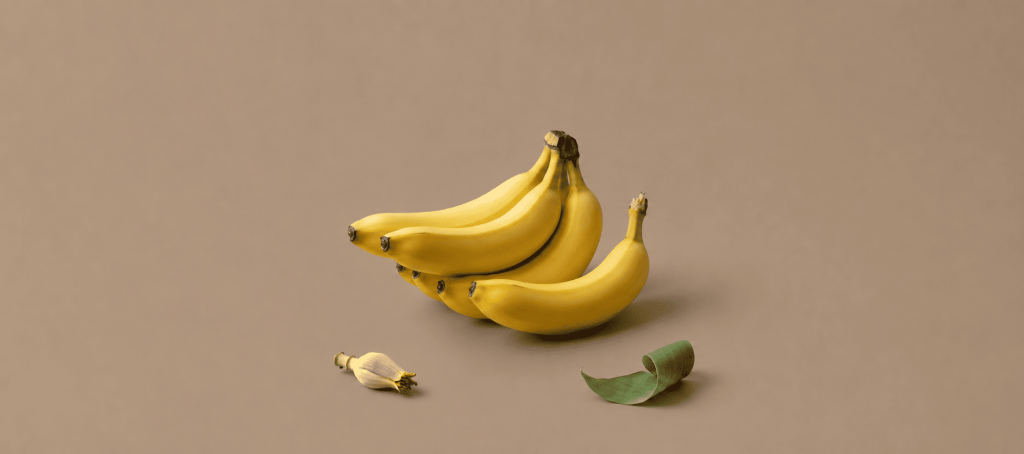
Quick answer: Yes, cats can technically eat banana. Bananas are listed as non-toxic to cats by the ASPCA, so a tiny lick or nibble won’t poison your cat. But “non-toxic” is not the same as “good for them.” Cats are obligate carnivores, they get zero nutritional benefit they actually need from banana, and — here’s the part most articles skip — they literally cannot taste the sweetness that makes bananas appealing to us. If you still want to share a bite, the safe amount is roughly a pea-sized piece, no more than once a week.
Below is everything a cat owner needs to know: the real risks, the surprising science of feline taste, exact portion guidance, and a full chart of which fruits are safe versus dangerous.
So, Can Cats Eat Bananas? The Short Answer
Yes — bananas are safe in the sense that they contain no compounds known to be toxic to cats. There’s no persin (the problem with avocados), no theobromine (the problem with chocolate), and no thiosulfate (the problem with onions and garlic). That’s why the ASPCA classifies the banana plant and its fruit as non-toxic to cats, dogs, and horses.
But food safety has more than one dimension. Toxicity is only the first question. The more important questions for a cat are: Can their body actually digest it? Do they need it? And does it crowd out the nutrition they do need? On all three counts, banana scores poorly. So the honest answer is: a small amount won’t hurt a healthy cat, but there’s no good reason to feed it, and several reasons to keep portions tiny.
Why “Non-Toxic” Doesn’t Mean “Healthy” for Cats
Cats are obligate carnivores. According to Cornell University’s Feline Health Center, this means they rely on nutrients found only in animal tissue. Cats evolved as hunters eating prey that is high in protein, moderate in fat, and very low in carbohydrates — and their bodies still demand those proportions today.
A cat needs specific nutrients it cannot make on its own and can only get from meat: taurine (critical for heart and eye health), arachidonic acid, preformed vitamin A, and niacin, among others. A banana contains none of these in any meaningful amount. Worse, a cat’s digestive system is built for protein and fat, not sugar and starch. Cats produce very little amylase, the enzyme that breaks down carbohydrates, compared with omnivores like humans and dogs. Carbohydrates that aren’t efficiently digested can ferment in the gut and cause gas, bloating, or loose stool.
In short: feeding banana to a cat is a bit like topping off a sports car with the wrong fuel. It won’t necessarily break down on the spot, but it’s not what the engine was designed for.
The Twist Most Articles Miss: Your Cat Can’t Taste the Banana
Here’s the fact that reframes this entire question. Cats cannot taste sweetness at all.
Most mammals detect sweet flavor using a taste receptor built from two proteins, T1R2 and T1R3, coded by the genes Tas1r2 and Tas1r3. In a landmark 2005 study published in PLOS Genetics, researchers at the Monell Chemical Senses Center found that the cat’s Tas1r2 gene is broken — it carries a 247-base-pair deletion plus additional disabling mutations, making it a non-functional “pseudogene.” Without that working protein, the sweet receptor can’t assemble. As Scientific American put it, a cat facing a sugar cube is in roughly the same sensory position as a human facing ultraviolet light: the signal is there, but the receptor to detect it is not.
This isn’t unique to house cats — the same broken gene appears in tigers and cheetahs. It’s an evolutionary signature of a strict meat-eating lineage that hasn’t needed to detect sugar for tens of millions of years.
The practical takeaway: if your cat enjoys banana, it isn’t because it tastes sweet to them. It’s far more likely the soft, mushy texture, the smell, or simple curiosity about what you’re eating. So the main reason humans love bananas — sweetness — is completely lost on your cat.
Banana Nutrition Facts (and What Cats Actually Need)
A medium banana (about 118 g) contains roughly:
| Nutrient | Amount (per medium banana) | Relevance to cats |
|---|---|---|
| Calories | ~105 kcal | High for a tiny carnivore |
| Carbohydrates | ~27 g | Cats need almost none |
| Sugars | ~14 g | Cats can’t taste it; spikes blood sugar |
| Fiber | ~3 g | Cats need very little dietary fiber |
| Protein | ~1.3 g | Negligible, and plant protein at that |
| Fat | ~0.4 g | Negligible |
| Potassium | ~422 mg | Minor; cats get plenty from cat food |
| Vitamin B6 | ~0.4 mg | Cats synthesize their own needs |
| Vitamin C | ~10 mg | Cats make their own vitamin C |
(Values based on standard USDA figures for a raw medium banana.)
Now compare that to a cat’s daily needs. The average healthy 10-pound adult cat requires only about 200–250 calories per day, and almost all of it should come from animal protein and fat. Feeding even one-eighth of a banana adds roughly 13 calories and several grams of carbohydrate — calories that should have gone toward muscle-building protein and essential amino acids instead. In a tiny daily ration, that’s a meaningful amount of wasted space.
Are There Any Benefits of Banana for Cats?
Let’s be fair and honest: the benefits are real but minor and largely unnecessary.
- A little fiber — the small amount of fiber in banana could, in theory, help a cat with mild, occasional constipation. But there are better, vet-recommended ways to manage that.
- Potassium and B6 — banana is a decent source for humans, but a complete, balanced cat food already supplies everything your cat needs. Your cat is not potassium-deficient because it skipped fruit.
- Enrichment — offering a novel texture can be a tiny moment of enrichment and bonding. This is probably the most legitimate reason to share a bite, and even then, a piece of plain cooked chicken does the job better and aligns with their biology.
Bottom line: there is no nutrient in a banana that your cat can’t get more efficiently from proper cat food. Banana is a novelty, not a health food, for felines.
The Real Risks of Feeding Banana to Cats
This is where portion size matters. The risks aren’t about acute poisoning — they’re about sugar, calories, and sensitive stomachs.
1. Sugar and weight gain. Bananas are high in natural sugar. Fed regularly, those extra sugary calories contribute to weight gain. Obesity is the single most common nutrition-related problem in cats, per Cornell, and it opens the door to arthritis, urinary issues, and diabetes.
2. Increased diabetes risk. This one deserves emphasis. Cornell researchers have found that overweight cats are roughly 4.5 times more likely to develop diabetes than cats at a healthy weight. A carbohydrate- and sugar-heavy treat habit is exactly the kind of thing that nudges a cat toward that weight problem over time.
3. Digestive upset. Because cats have limited ability to break down carbohydrates, even a modest amount of banana can cause vomiting, diarrhea, gas, or bloating — especially in a cat that isn’t used to it. Some cats are more sensitive than others, and you won’t know which kind you have until something goes wrong.
4. Choking and blockage. Large chunks, or the peel, can be a choking hazard or cause an intestinal obstruction, particularly in kittens or small cats.
5. It displaces real nutrition. Every treat calorie is a calorie not spent on the protein and taurine your cat actually requires. Filling up on banana means eating less of the food that keeps them healthy.
How Much Banana Can a Cat Eat?
The governing principle here is the 10% rule. Both Cornell and PetMD advise that all treats combined should make up no more than 10% of a cat’s daily calorie intake (Cornell allows up to 10–15%). The other 90% must come from complete, balanced cat food.
Here’s what that means in practice for a typical 10-pound cat:
- Daily calories: ~200–250 kcal
- Treat budget (10%): ~20–25 kcal total — and that’s for all treats, not just fruit
- A safe banana serving: about a 1 cm cube, roughly the size of a green pea, offered once a week at most
That tiny amount is deliberate. It keeps sugar and calories trivial while still letting your cat investigate something new. Never make banana a daily habit, and never let it replace a meal.
How to Safely Feed Banana to Your Cat
If you’ve decided to offer a little banana, do it the right way:
- Check with your vet first — especially if your cat is overweight, diabetic, a senior, a kitten, or has any GI or kidney condition.
- Use only ripe, fresh banana flesh. Skip green or overripe bananas.
- Peel it completely. Never offer the peel.
- Offer a tiny amount — a pea-sized piece, mashed or in a thin slice so it’s easy to chew and swallow.
- Plain only. No banana that’s been mixed with sugar, honey, peanut butter, chocolate, dairy, or anything else.
- Introduce it slowly the first time, and watch your cat for 24 hours for any vomiting, diarrhea, or unusual behavior.
- If your cat ignores it, don’t push. Many cats sniff and walk away — that’s a perfectly fine outcome.
What About Banana Peels, Chips, Bread, and Pudding?
This is where most accidental problems actually happen, because the danger is usually the other ingredients.
Banana peels — No. The peel isn’t toxic, but it’s tough, fibrous, hard for cats to digest, and a genuine choking or intestinal-blockage risk. It may also carry pesticide residue. Keep peels off the counter and out of reach.
Banana chips — No. Store-bought banana chips are typically fried in oil and coated in added sugar, which makes them far worse than fresh banana. The concentrated sugar and fat are exactly what a cat doesn’t need.
Banana bread — No. Banana bread is loaded with sugar, flour, butter, and often walnuts or raisins. Raisins are toxic to cats (more on that below), and the whole thing is a recipe for digestive trouble. Don’t share it.
Banana pudding / banana-flavored yogurt or ice cream — No. These combine high sugar with dairy, and most adult cats are lactose intolerant. Some products also contain xylitol, an artificial sweetener that is dangerous to pets. Avoid entirely.
Frozen banana — Not recommended. While plain frozen banana isn’t toxic, cats generally dislike cold food, and the hardness adds a choking risk. If you offer banana at all, room-temperature and mashed is the safer route.
Can Kittens Eat Bananas?
Best to wait, and even then keep it to a near-zero amount. Kittens have intensive nutritional needs for rapid growth and should be eating a complete, kitten-formulated diet that’s high in animal protein. Their tiny digestive systems handle plant sugars even less efficiently than adult cats, and the choking risk from any solid piece is higher. There’s simply no upside to giving a growing kitten banana. If you want to reward a kitten, stick to vet-approved kitten treats.
Can Diabetic, Senior, or Sensitive Cats Eat Bananas?
For these cats, the answer is closer to a firm no.
- Diabetic cats: Because of the sugar content, cats with diabetes should not be given fruit, including banana. PetMD is explicit on this point. The blood-sugar swing isn’t worth it.
- Overweight cats: Every extra calorie matters when you’re trying to prevent or reverse obesity. Skip the banana and choose a low-calorie, protein-based treat instead.
- Cats with kidney disease, IBD, or a history of GI upset: These cats are especially vulnerable to the carbohydrate load and digestive irritation. Always clear any new food with your veterinarian first.
Signs Your Cat Is Having a Bad Reaction
Even though banana is non-toxic, watch for these signs after your cat eats it — and especially if your cat got into something fruit-related you didn’t hand over:
- Vomiting or repeated retching
- Diarrhea or unusually loose stool
- Excessive gas or visible bloating
- Lethargy or hiding
- Loss of appetite
- Drooling, pawing at the mouth, or signs of choking
For mild digestive upset from a small amount of banana, symptoms usually pass on their own. But if symptoms are severe, persistent, or your cat may have eaten a toxic fruit (like grapes or raisins), don’t wait. Contact your veterinarian or call the ASPCA Animal Poison Control Center at (888) 426-4435 right away. With genuinely toxic fruits, early intervention dramatically improves outcomes.
Other Fruits: Safe vs. Toxic for Cats
Banana isn’t the only fruit cats sniff around. Here’s a quick reference chart. “Safe” always means plain, in tiny amounts, as an occasional treat only — never a dietary staple.
| Fruit | Safe for cats? | Notes |
|---|---|---|
| Banana | ✅ In tiny amounts | Non-toxic but sugary; pea-sized, weekly max |
| Blueberries | ✅ Best option | Low sugar, soft, antioxidant-rich; 1–2 at a time |
| Watermelon | ✅ In moderation | Seedless, rind removed, flesh only; hydrating |
| Cantaloupe | ✅ In moderation | High water content; remove seeds and rind |
| Apple | ✅ Flesh only | Peel it; seeds, stem, and leaves contain cyanide |
| Strawberries | ✅ In moderation | Non-toxic; high in sugar, so go small |
| Pear | ✅ Flesh only | Peeled, seedless; seeds contain cyanide compounds |
| Grapes & raisins | ❌ Never | Toxic — linked to acute kidney failure; no safe dose |
| Citrus (lemon, lime, orange, grapefruit) | ❌ Avoid | Essential oils and psoralens are harmful; cats hate the smell anyway |
| Cherries | ❌ Avoid | Pits, stems, and leaves contain cyanide compounds |
| Green/unripe tomato | ❌ Avoid | Contains solanine; green parts of the plant are toxic |
| Avocado | ❌ Avoid | Contains persin; pit is also a choking/obstruction hazard |
| Stone fruit pits (peach, plum, apricot) | ❌ Remove pits | Pits contain cyanide and can cause blockages |
The two hardest stops on this list are grapes/raisins and citrus. Grapes and raisins can trigger sudden kidney failure in cats, and researchers believe tartaric acid is the likely culprit — but because no safe amount has been established, any ingestion should be treated as an emergency. For the full, authoritative breakdown, see PetMD’s guide to fruits cats can eat and the ASPCA’s toxic and non-toxic plant list.
“But My Cat Loves Banana!” — Should I Worry?
Plenty of cats come running at the sound of a banana being peeled, and owners are often surprised given that cats can’t taste sweet. So what’s the attraction? Likely a mix of the aroma, the soft texture, and good old-fashioned curiosity about your food. Some researchers have even speculated that certain volatile compounds in ripe bananas may register as mildly interesting (or off-putting) to cats — reactions vary a lot from cat to cat.
None of this is cause for alarm. A cat that enjoys a pea-sized bite of banana once in a while is fine. Just don’t mistake their enthusiasm for a nutritional need, and don’t let “my cat loves it” turn into a daily sugar habit. Keep it occasional, keep it tiny, and keep the bulk of their diet where it belongs: high-quality, meat-based cat food.
Frequently Asked Questions
Can cats eat bananas safely? Yes, in very small amounts. Bananas are non-toxic to cats per the ASPCA, but their high sugar content means they should only ever be an occasional, pea-sized treat — not a regular food.
Do bananas have any health benefits for cats? Minimal. Bananas offer a little fiber and potassium, but cats get everything they need from balanced cat food. There’s no nutrient in banana that your cat actually requires.
Can kittens eat bananas? It’s best to avoid it. Kittens need a high-protein, kitten-formulated diet for proper growth, and their digestive systems handle plant sugars poorly. Stick to kitten food and vet-approved treats.
How much banana can I give my cat? No more than a 1 cm cube (about the size of a pea), and no more than once a week. All treats combined should stay under 10% of your cat’s daily calories.
Can cats eat banana peels? No. Peels aren’t toxic but are hard to digest and pose a choking and intestinal-blockage risk. Always remove the peel.
Why does my cat like banana if cats can’t taste sweet? Cats lack a working sweet taste receptor, so it’s not the sweetness. They’re usually drawn to the texture, smell, or simply your attention and food.
Is banana bread or banana pudding okay for cats? No. These contain sugar, dairy, and sometimes raisins, walnuts, chocolate, or xylitol — all of which range from unhealthy to outright toxic for cats.
What should I do if my cat eats a toxic fruit like grapes? Treat it as an emergency. Call your veterinarian or the ASPCA Animal Poison Control Center at (888) 426-4435 immediately — don’t wait for symptoms to appear.
The Bottom Line
Can cats eat banana? Yes — but they don’t need to, and they can’t even taste why we like it. Bananas are non-toxic, so a pea-sized nibble won’t harm a healthy adult cat. Beyond that, banana offers a sugar load your obligate carnivore isn’t built to process, calories that crowd out essential protein, and a real (if small) risk of digestive upset or, over time, weight gain.
If you enjoy sharing, keep it tiny, keep it plain, keep it rare, and check with your vet first — particularly for kittens, seniors, and cats with diabetes or weight issues. For a treat that actually fits feline biology, a little plain cooked chicken beats a banana every time.
Sources & Further Reading
- ASPCA — Edible Banana: Toxic and Non-Toxic Plants
- ASPCA — Toxic and Non-Toxic Plant List for Cats
- Cornell University College of Veterinary Medicine, Feline Health Center — Feeding Your Cat
- PetMD — What Fruits Can Cats Eat?
- Scientific American — Strange but True: Cats Cannot Taste Sweets
- Li X. et al., PLOS Genetics (2005) — Pseudogenization of a Sweet-Receptor Gene Accounts for Cats’ Indifference Toward Sugar
This article is for general informational purposes and is not a substitute for professional veterinary advice. Always consult your veterinarian before introducing any new food to your cat’s diet.